Who’s Who in the New PA Government

By Palestine Center

Last week, a new Palestinian Authority (PA) government was announced after a reconciliation agreement between the PLO and Hamas decided to establish a consensus government of independents and technocrats to pave the way for new elections.

Summer Film Series: “When I Saw You” (Lamma Shoftak) by Annemarie Jacir

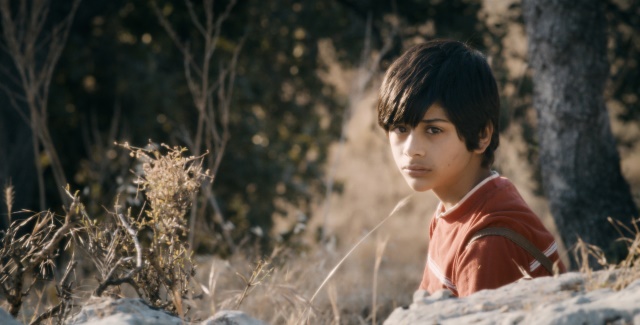
1967. The world is alive with change: brimming with reawakened energy, new styles, music and an infectious sense of hope. In Jordan, a different kind of change is underway as tens of thousands of refugees pour across the border from Palestine. Having been separated from his father in the chaos of war, Tarek, 11, and his mother Ghaydaa, are amongst this latest wave of refugees.

A Pattern of Nakba Passivity at the New York Times

By Yousef Munayyer

Last week I wrote about the use of the passive voice in describing the Nakba in the New York Times. This device allows for a sense of ambiguity as to who did what and specifically, who destroyed Palestinian villages. However, on May 16th this is how Jodi Rudoren described it: After two young Palestinian men were killed Thursday by Israeli security forces during a demonstration commemorating the Nakba — Arabic for “catastrophe,” and the word used to describe Israel’s destruction of Palestinian villages as it became a state in 1948 — two Israeli journalists said they were nearly “lynched” by a Palestinian mob.

Are Israeli Apartheid Laws Affecting US Media?

By Yousef Munayyer

Given the recent statement made by Secretary Kerry about apartheid and Israel and the subsequent walk back, there was a great deal of discussion around the issue in the mainstream media in the last 48 hours.

You’d think the media might want to speak to some Palestinians, you know, those people suffering from the very system in question here, whatever you want to call it. It would be odd, for example, for network news shows to talk about racism without talking to people of color or talking about misogyny without talking to any women. Well, let me revise this, this would be odd in most places but Fox News, where we’ve come to expect such things.

“From These Streets” with Mohammad Al-Azza, Photo-journalist from Lajee Center

In Co-Sponsorship with the DC Palestinian Film & Arts Festival Tuesday, December 17, 2013 12:30 – 2:00 p.m. EST The Jerusalem Fund   What does it mean to be a photographer rooted in community, especially when that community is a Palestinian refugee camp? Mohammad Al-Azza, who teaches youth about photography and documentary production in the … Read more

The Politics of Identity in the Middle East

Panel I – Prospect for Palestinian Freedom: Assessing the “peace process” and exploring alternatives; Panel II – Sectarianism Spinning out of Control: The drivers and victims of hate; Panel III – Palestine in the Middle: Effects of regional conflict on the future of Palestine and its Politics; Panel IV – A Return to the Cold War?: The foreign policies of great powers and regional players

Summer Film Series: “Sacred Stones” by Muayad Alayan and Laila Higazi

Natural stone is the most requested Palestinian raw material, considered white oil. The natural stone’s extraction system causes environmental, social, and health problems within villages, refugee camps and cities. The Israeli occupation responds with persecution of Palestinian complaints, whose voices are unanswered by international organizations and ignored by the Palestinian authorities.

Summer Film Series: “Fire on the Marmara” by David Segara

On May 31, 2010 while still in international waters, Israeli commandos killed nine people who were traveling on a humanitarian mission on the Mavi Mamara. Traveling together with them, 700 activists from Caracas to Valencia, Barcelona, Brussels, London, Stockholm, and Istanbul attempted to bring supplies and break the blockade that the Palestinian population of Gaza has been suffering for years.

Daytime Film: “Route 181: Fragments of a Journey in Palestine-Israel” by Michel Khleifi and Eyal Sivan

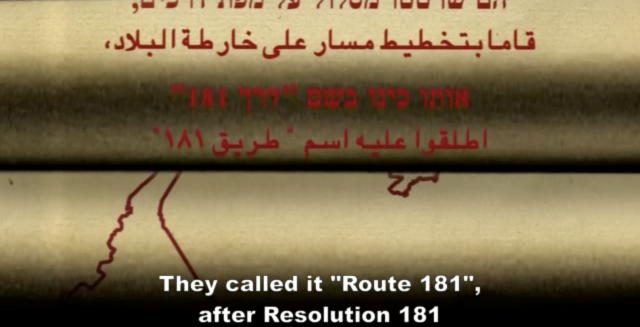
A three-part documentary, the film “Route 181” follows the borders drawn up by UN Resolution 181 which was adopted by the UN on 29 November 1947 to separate Palestine into two states – one Jewish and one Arab. 56 percent of the territory was attributed to the Jewish minority while 43 percent was given to the Arab majority, with a small central area given over to international supervision. Fifty-five years later, the journey of these two filmmakers along Route 181 traces a border which never actually existed.