Interview: Inside ANERA’s Projects in Palestine

By Jada Bullen and Marie Helmy

For almost two decades, Mohammed Abu Rajab and Rabah Odeh have been working in infrastructural development in the West Bank and Gaza as field staff for American Near East Refugee Aid (ANERA), which focuses on meeting the development and humanitarian needs of Palestinians in the Occupied Territories and refugee camps in Lebanon since 1968. On their recent trip to the United States to attend the annual ANERA dinner in Washington, D.C. on Oct. 7th 2016, Mr. Abu Rajab and Mr. Odeh were able to visit the Palestine Center.

A Pattern of Nakba Passivity at the New York Times

By Yousef Munayyer

Last week I wrote about the use of the passive voice in describing the Nakba in the New York Times. This device allows for a sense of ambiguity as to who did what and specifically, who destroyed Palestinian villages. However, on May 16th this is how Jodi Rudoren described it: After two young Palestinian men were killed Thursday by Israeli security forces during a demonstration commemorating the Nakba — Arabic for “catastrophe,” and the word used to describe Israel’s destruction of Palestinian villages as it became a state in 1948 — two Israeli journalists said they were nearly “lynched” by a Palestinian mob.

Evening Films: “Restored Pictures” & “Kings and Extras”

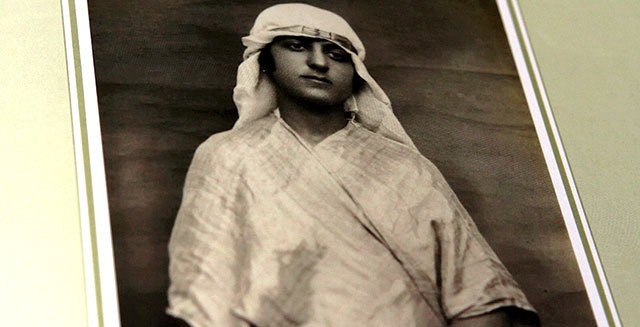
Short documentary “Restored Pictures,” 22 mins by Mahasen Nasser Eldin followed by “Kings and Extras,” 62 mins by Azza El-Hassan. Both films touch on the significant contributions Palestinians have made to their own documentation, respectively in the periods of pre-Nakba and post-Nakba.