What Jerusalem Means To Us: Christian Perspectives and Reflections
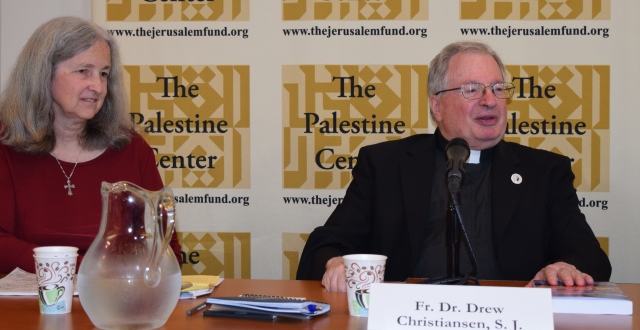
Fr. Dr. Drew Christiansen, S. J, Dr. Carole Monica Burnett, and Sir Rateb Rabie are three authors who contributed to the recently published book, “What Jerusalem Means to Us”. here they share their intimate experiences in and reflections on the Holy City from this special collection of essays written by Palestinian and other Christians of various cultural, ethnic, and national backgrounds.

Jerusalem: Communities Leading Change

Fayrouz Sharqawi,  Advocacy Director at Grassroots International, discusses the recent movement for Al Aqsa and the necessity of organizations like Grassroots Jerusalem to build a cohesive political platform through which Jerusalemites can voice their demands and bring attention to the indigenous and independent Palestinian economy outside of the international aid and NGO system.

Gaza’s Children And The Israeli Offensive Of 2014: Two Years Later

By Zeina Azzam

“During Israel’s 2014 assault on Gaza and its 1.8 million inhabitants, Palestinian poet Khaled Juma penned a moving poem titled ‘Oh Rascal Children of Gaza’. The first few lines were about the chaos and mischief that the children had perpetrated in their neighborhoods before the war, but the wistful ending laments, ‘Come back/and scream as you want/and break all the vases./Steal all the flowers./Come back./Just come back…'”

Palestinian families homeless as Israeli military demolishes West Bank houses

Israeli military bulldozers have demolished 23 houses in two impoverished southern West Bank villages, including structures that were home to more than 100 people. The demolitions, one of the most significant in recent memory, occurred in a controversial Israeli-designated military area known as Firing Zone 918, which comprises approximately 115 square miles (300 sq km) and was declared restricted by the Israelis in the 1970s.

Palestinian poet and artist Ashraf Fayadh sentenced to death in Saudi Arabia

By Zeina Azzam

The Palestinian artist, curator, and poet Ashraf Fayadh, 35, has been sentenced to death by beheading. Saudi Arabian authorities have declared his crime as “apostasy,” or abandoning one’s religion—in this case, renouncing Islam. Several other charges were also leveled against Fayadh, including allegedly photographing women and storing their pictures on his phone, a violation of the country’s Anti-Cyber Crime Law.

Palestine’s lost present: A journey in the Jordan Valley

Although the 1994 Oslo Agreement allocated the Jordan Valley for a future Palestinian state, 93.4 percent of the land is in Israeli control, part of Area C. On that land, there are now close to 40 Israeli settlements, deemed illegal under international law, which use twice the amount of arable land available to the Palestinians.

Two Israelis charged in firebombing that killed Palestinian family

Two Israeli Jewish citizens have been charged in the arson attack that killed three members of the Dawabsha family last summer. Israeli prosecutors charged 21-year-old Amiram Ben-Uliel with three counts of murder. Ben-Uliel was also charged with attempted murder for trying to set fire to another house. Prosecutors also charged a minor with accessory to murder. He reportedly helped plan the attack but did not show up to execute it.

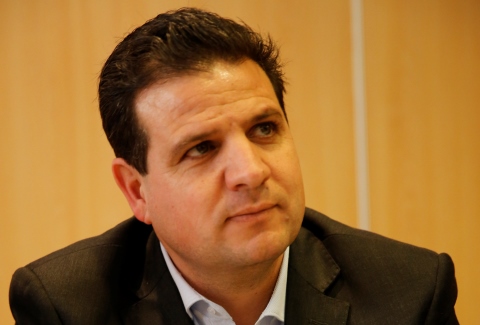
Ayman Odeh, a top Palestinian Israeli leader, is inspired by Dr. Martin Luther King, Jr.

The new prominence of Ayman Odeh, the dynamic and popular Palestinian Israeli political leader, means that the apologists for Israel can no longer even pretend that there are no significant non-violent movements for justice there. Odeh is the 40-year-old head of the Joint List, the coalition of Arab parties which won 13 seats in last March’s elections, making it the third-largest political group in the Knesset. He is on a busy 2-week tour of the United States, and he made a point of visiting the Ebenezer Baptist Church in Atlanta, Dr. Martin Luther King Jr.’s home congregation, where he was introduced from the pulpit to a standing ovation.

Bashing Arabs, Muslims, and Refugees

By Zeina Azzam

Judging by the vitriolic reactions against Muslims—and especially Syrians—in U.S. society after the Paris bombings, it is clear that few understand that the vast majority of the casualties of ISIS’s bloody strikes are actually Muslims. The group has wreaked havoc in majority Muslim states for a number of years. But so many people in Europe and the United States seem not to understand that the Islamic State does not represent Muslims, and that Muslims are in fact terrified by and abhor the savage tactics of the group. They are trying desperately to escape the lands under ISIS control.