Permission To Narrate

– Edward Said

The late Palestinian scholar, Edward Said, remarked that Palestinians had been denied permission to narrate their history and speak of the day-to-day experiences of life in the margins. Here, we reclaim that permission to narrate our own stories.

“Forbidden Colors” Coming to Light

By Palestine Center Interns — Sarah Dickshinski, Abby Massell, Zoë Reinstein, and Mirvat Salameh

This summer, Gallery Al-Quds presents “Forbidden Colors,” examining 30 artists’ responses to various forms of censorship or political pressure — specifically, the 1980 Israeli law forbidding artwork composed of the four colors of the Palestinian flag: red, green, black, and white. That the “forbidden colors” of the Palestinian flag still carry such a stigma indicates that exhibitions that bring exposure to this continuing issue are of the utmost importance. We are reminded that art is perhaps the most powerful tool of resistance and revolution, and the artists featured in this show exemplify this in the works they contributed.

Is it an occupation or an “occupation”?

By Zeina Azzam

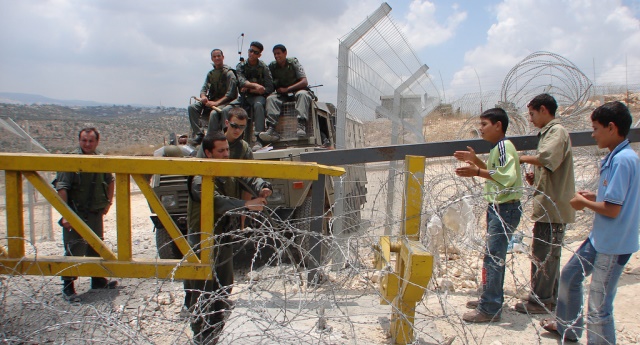
One is hard pressed to ask, what is the problem in calling the Occupied Palestinian Territories just that, territory occupied by Israel in the 1967 war? This is the exact terminology of Amnesty International. Oxfam uses Occupied Palestinian Territory. The Israeli human rights organization B’Tselem employs Occupied Territories. The United Nations Office for the Coordination of Humanitarian Affairs has adopted occupied Palestinian territory (oPt). Even the US Department of State refers to The Occupied Territories.

What is the Value of Palestinian Cinema?

By Samirah Alkassim

When we consider what is most commonly encountered as Palestinian cinema, it is useful to borrow an analogy from linguistics. Double marking is when grammatical marks are placed at the heads of words, modifiers, and phrases as well as on their endings to indicate things like gender, case, and other distinctions. It occurs in both Modern Standard Arabic and Classical Arabic, as well as in other languages. Likewise, Palestinian cinema is doubly marked.

Remembering Muhammad Ali: “I declare support for the Palestinian struggle to liberate their homeland”

On the occasion of the passing of legendary athlete and struggler for justice, Muhammad Ali, Samidoun Palestinian Prisoner Solidarity Network joins millions around the world in remembering Ali’s historic legacy of commitment to the liberation of oppressed peoples and his willingness to sacrifice in order to adhere to those principles.

How one Jerusalem neighborhood has been left to fend for itself

When Tamara and Ala’a got married in 2012, in addition to their wedding in Beit Jala, they held a second ceremony in Jerusalem to ensure that they could register their marriage in the holy city. The couple moved into a small house in the Jerusalem suburb of Beit Safa to make sure that they could legally prove their connection to Jerusalem.

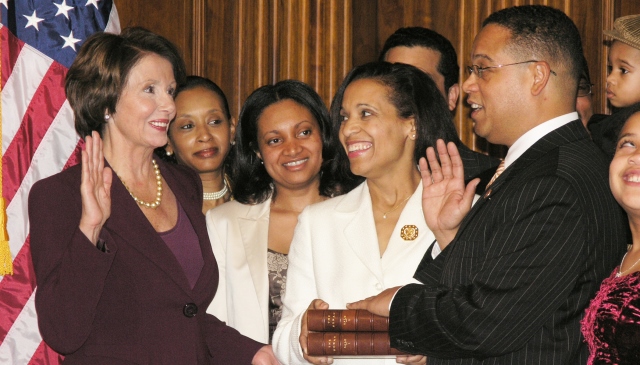
Rep. Keith Ellison draws attention to Israeli apartheid in tweet on Palestinian life under occupation

Rep. Keith Ellison shared a photo on Twitter on Thursday that refers to Israel’s illegal military occupation of the Palestinian territories as apartheid. Ellison, a Democratic congressman representing Minnesota, said he took the photo as he walked down a segregated street in Hebron, a city in the occupied West Bank. It shows a sign reading: ‘Caution: This was taken by Israel. You are entering apartheid.’

Forbidden Colors: Artists and Censorship

Artists from the United States and abroad create work in all media exploring the concept of artists’ responses to various forms of censorship or political pressure specific to artistic production. The show takes its name from a 1980 Israeli law forbidding artwork of “political significance,” which banned art composed of the four colors of the Palestinian flag: red, green, white, and black.  Palestinians were arrested for creating or displaying such artwork.  The ban was lifted after the signing of the Oslo Accords in 1993.