Permission To Narrate

– Edward Said

The late Palestinian scholar, Edward Said, remarked that Palestinians had been denied permission to narrate their history and speak of the day-to-day experiences of life in the margins. Here, we reclaim that permission to narrate our own stories.

Palestine and Hillary, ‘the lesser evil’

In the United States presidential race, we have officially entered into the moment of lesser evilism, which demands grudging support of the unappealing Democratic candidate in order to prevent the election of an even more deplorable Republican. Few things inspire such acrimonious debate among liberals and leftists. Rather than rehearsing the usual (and by now painfully familiar) arguments for and against voting Democrat, let’s explore what lesser evilism means for the communities on the receiving end of the necessary evil.
Israel-Palestine: A way to end the occupation

The brilliance of Israeli strategy over the past 50 years has been that by dangling the possibility of independence in front of Palestinians, Israeli leaders have incentivised them to devote decades of energy towards investing in an identity and a solution that had no chance of being realised in the existing local, regional and international contexts. And with both the PA and Hamas invested in the continuation of the status quo, any change in Palestinian politics and identity would have to arise from a grassroots that is under incredible pressure merely to hold the line on a daily basis.

The DNC Debates Israel and Palestine

By Zeina Azzam

It is clear that there are changes in the way Palestine and Israel are being discussed in the media and in the progressive movement in the United States. Now that the traditional taboos of criticizing Israel have been brought to light and acknowledged nationally, our work is to continue the momentum toward increased awareness of the Palestinians’ plight.

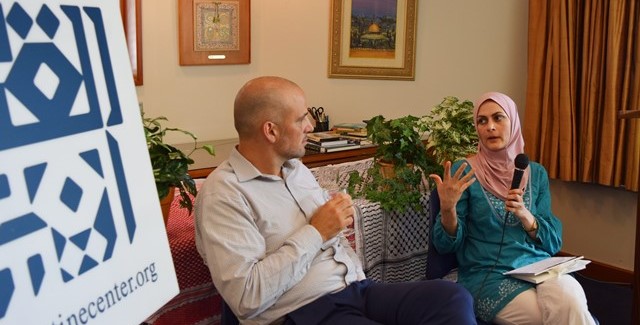
2016 Summer Intern Panel: “Overcoming Restrictions: Resistance through Publication & Expression”

In the concluding panel of the 2016 Summer Intern Lecture Series, Dr. William Youmans and Ms. Laila El-Haddad examine the less concrete but equally powerful restraints on the mobility of ideas in the Palestinian context. These include Israel’s suppression of political and literary expression, manipulation of the news, media blackouts, and outright censorship. As writers and social media experts, these panelists offer their experiences in the use of written and electronic media as powerful tools in the spread of ideas and resistance to Israel’s polities.

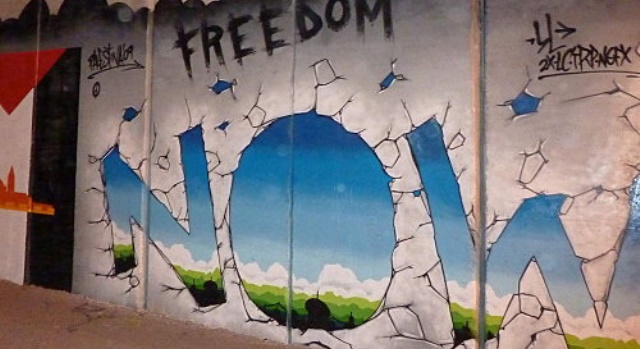
Forbidden Colors

Washington – Forbidden Colors, on view at the Gallery Al-Quds in Washington, is a free-for-all in the best of ways. Through 49 works in all media, 30 artists address artistic suppression, particularly the former Israeli ban on the use of red, green, black and white — the pan-Arab col­ours of the Palestinian flag. Every hue, topic and technique; every symbol, from poppies to keys, finds a place in the show. ‘I forbid you nothing,’ Dagmar Painter, cura­tor of the gallery, told artists in her invitation.

The First Palestinian Planned City Is Nothing if Not Divisive

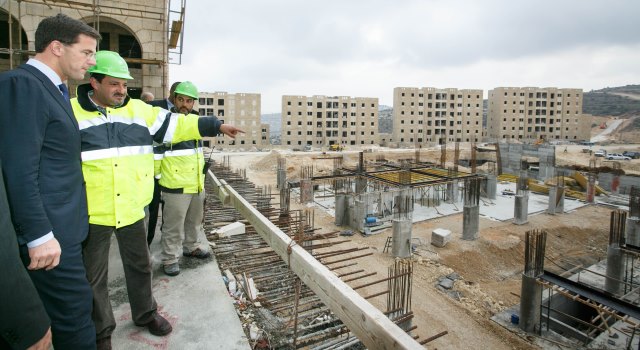
Earlier this month, thousands of Palestinians flocked to the Roman-style amphitheater in Rawabi, Palestine’s first planned city. The enthusiastic, post-Ramadan crowd came to hear Palestinian singer and Arab Idol winner Muhammad Assaf belt out some of his most popular tunes. Though the event was a success, Rawabi itself has struggled. The city, located about six miles north of Ramallah in the West Bank, aims to house 40,000 people, but only 300 families currently live in it. In May, The Guardian reported that only two of the 23 neighborhoods planned had been completed since work began in 2012. Rawabi has been likened to a ghost town, albeit an attractive and orderly one.

Palestinians use Pokemon Go to highlight life under occupation

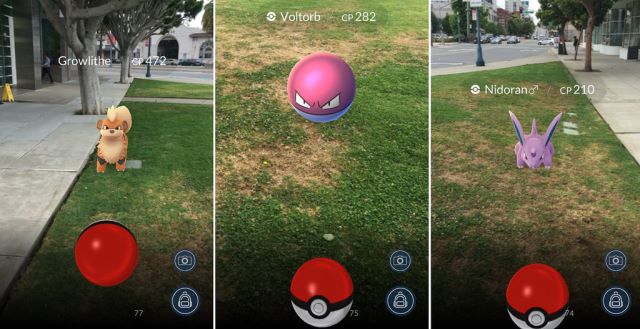
Palestinians are using the Pokemon Go game to highlight their plight in the face of Israel’s continuing occupation, News.com.au reported yesterday. The game, which is banned in some countries and is said to breach national security in others, has gone viral though it has not officially been released in the Middle East. Using the smartphone app, Palestinians are highlighting life under military occupation.

‘Gaza In Context’: Introducing Israel’s Settler-Colonial Ambitions to the American Classroom

By Palestine Center Interns — Sarah Dickshinski, Abby Massell, Zoë Reinstein, and Mirvat Salameh

Gaza in Context challenges squarely the U.S. and Israeli dominant narrative. By including Palestinian narratives, it counters the perception of Israeli victimization in the American educational system; therefore, the project is a crucial academic project that contextualizes Israel’s involvement in Gaza and situates Israel’s continuous aggression and siege within its broader settler-colonial ambitions. The project as a whole attempts to shift the discussion of the Israeli-Palestinian conflict in American classrooms away from Israeli hasbara and to nuance discourse on Palestine as an entity under Israeli military occupation.