Permission To Narrate

– Edward Said

The late Palestinian scholar, Edward Said, remarked that Palestinians had been denied permission to narrate their history and speak of the day-to-day experiences of life in the margins. Here, we reclaim that permission to narrate our own stories.

Israel’s desalination miracle, Santa Claus and other fairy tales
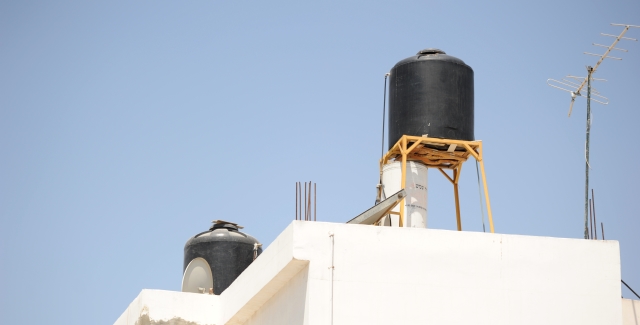
Scientific American recently ran a feature on Israel’s desalination industry, hailing it as a miraculous feat of ingenuity of a small nation in the midst of burning, backward nations. To quote the article’s romanticised language, the author refers to Israel as ‘a galvanised civilisation that created water from nothingness’ where just a few miles away, alluding to Syria and Iraq specifically, but also Arab nations in general, ‘water disappeared and civilisations crumbled’.

Gaza’s Children And The Israeli Offensive Of 2014: Two Years Later

By Zeina Azzam

“During Israel’s 2014 assault on Gaza and its 1.8 million inhabitants, Palestinian poet Khaled Juma penned a moving poem titled ‘Oh Rascal Children of Gaza’. The first few lines were about the chaos and mischief that the children had perpetrated in their neighborhoods before the war, but the wistful ending laments, ‘Come back/and scream as you want/and break all the vases./Steal all the flowers./Come back./Just come back…'”

Fabric of Resistance

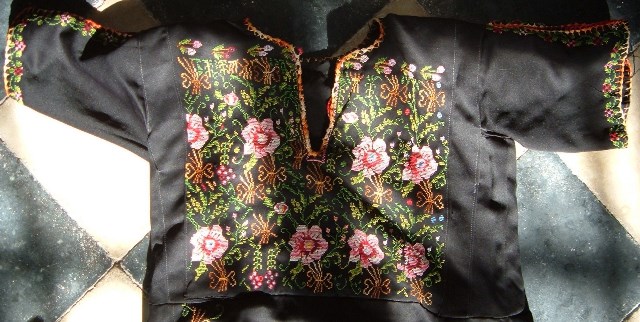
During the First Intifada, when Israeli soldiers confiscated the flags of Palestinian women protesting in the streets, the women responded by embroidering the Palestinian flag and silhouettes of the country in endless repetition along the chests, sleeves, and back hems of their thobes (traditional Palestinian dresses). Samples of these politically charged ‘Intifada Dresses’ are on display through July 30 in Beirut, Lebanon as part of an ambitious survey featuring more than 60 embroidered items, as well as photographs, paintings, and graphic arts representing Palestinian textiles throughout history.

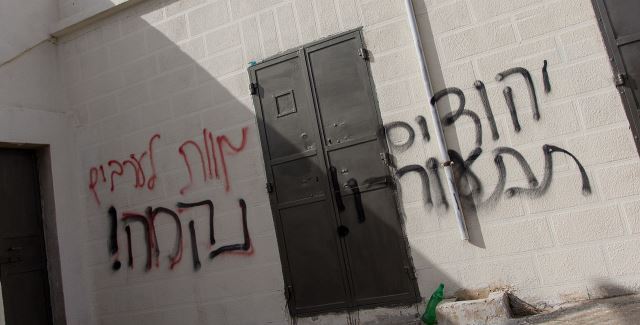
Burning the Olive Branch: Settler Violence in the Occupied Palestinian Territories

By Palestine Center Interns — Sarah Dickshinski, Abby Massell, Zoë Reinstein, and Mirvat Salameh

In an attempt to hold Israel accountable and inform the rest of the world, the Negotiations Affairs Department of the Palestine Liberation Organization maintains a “Daily Report” database that offers basic information about Israeli-Palestinian interactions that occur during a 24-hour period in the occupied Palestinian territories. Where the PLO report covers a range of incidents that take place in the oPt, the Palestine Center analyzes the reports specifically for acts of violence committed by Israeli settlers against Palestinians, forming the Settler Violence Project. We extract the time, location, and a brief description of the violent act from the database and then classify the violence into one of four categories: Assault, Assault on a Place of Worship, Raid, and Destruction of Property.

The Washington Post Reviews “Forbidden Colors”

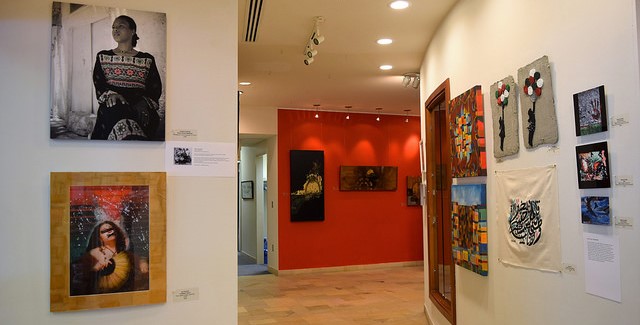
After visiting “Forbidden Colors” on display at Gallery Al-Quds, Mark Jenkins of The Washington Post comments, “The work is by 33 artists, and varies as widely in quality and sophistication as Civilian’s rock-legend show. A few puckish entries render the flag, or its colors, in found objects: Rajie Cook uses painted cat-food cans, while Andrew Courtney’s photograph arranges eggplant, tomatoes, peppers and cauliflower.”

Meet Ali Kurnaz, young Democratic leader who lifted Palestinian flag on convention floor

For those who care about Palestine, the most exciting moment of the Democratic convention took place Monday when a young delegate jumped on to his chair on the convention floor and unfurled the Palestinian flag. He was soon surrounded by a crowd holding up Hillary Clinton signs to make his demonstration disappear. But the incident quickly went out on social media — ‘a very human moment in a very dark time,’ as Laila Abdelaziz put it.