Why is Israel raiding Palestinian universities?
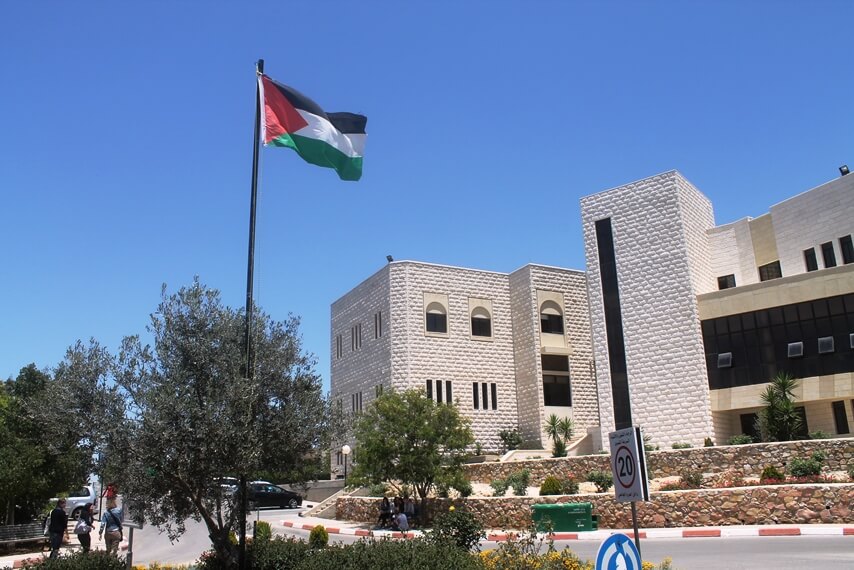
The Palestinian academic community hopes to internationally shame Israel for its raids on universities and disruption of education in the West Bank. During the current uprising in the West Bank, Israel Defense Forces (IDF) stormed two Palestinian universities: Birzeit University near Ramallah on Jan. 11 and Al-Quds University at Abu Dis in East Jerusalem on Jan. 29.
Traveling While Black: I Was Racially Profiled and Locked Up in Israel

For two months I have been silent about an unexpected and traumatic experience: my racial profiling, arrest and incarceration by the state of Israel in mid-December. The Israel Airports Authority officer in charge alleged that my clearly-labeled bottle of ibuprofen from CVS was actually Captagon, an illegal amphetamine that Western news media has recently labeled the drug of choice for Syrian and ISIS fighters.

Roger Waters: Pink Floyd star on why his fellow musicians are terrified to speak out against Israel

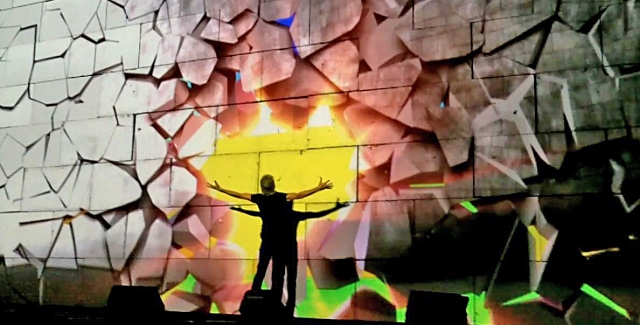
American musicians who support boycotting Israel over the issue of Palestinian rights are terrified to speak out for fear their careers will be destroyed, according to Roger Waters. The Pink Floyd star – a prominent supporter of the boycott, divestment and sanctions (BDS) campaign against Israel since its inception 10 years ago – said the experience of seeing himself constantly labelled a Nazi and anti-Semite had scared people into silence.

Palestinian artist uses cacti to embody Palestinian suffering

Ahmed Mohamed Yassin, 21, a Palestinian university student uses a rather unusual tool to carve his paintings.Yassin uses cacti or prickly pears to embody Palestinian suffering and aspirations. To Yassin, cacti have symbolic meanings because they signify patience and resilience. “They are available at no cost and have the ability to absorb and preserve colours,” he explained.

Understanding the Current Palestinian Revolt: Its Context and Consequences for Palestinian Society

Since the fall of 2015 the world has witnessed a deadly spate of attacks on Palestinians by Israeli soldiers, police, and settlers, with over 160 Palestinians killed. The violence began with tensions at Al Aqsa mosque and spread quickly beyond East Jerusalem to the West Bank, Gaza, and Israel as soldiers employed shoot-to-kill tactics, claiming that their assailants, many of them youth at checkpoints, were threatening them with knife attacks. With the eruption of this violence coinciding with the 15-year anniversary of the second intifada, journalists, analysts, and scholars debated whether the Palestinian revolt could be called a “third intifada.” 

Academic boycott of Israel takes off in Italy

More than 200 academics from 50 Italian universities have signed a call for the boycott of Israeli academic institutions until Israel complies with international law. This is the first time a significant number of Italian academics have taken a public stand in support of the Palestinian-led campaign of boycott, divestment and sanctions (BDS).

A gruelling life for Palestinian workers in Israel

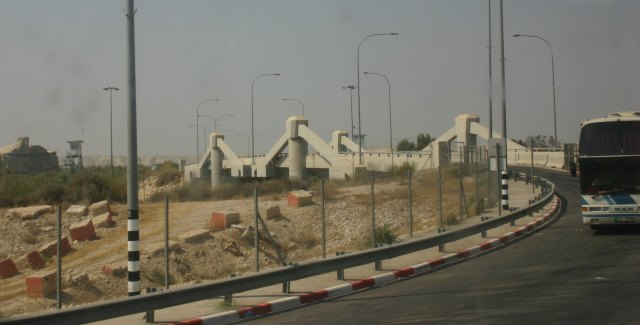
Bethlehem, occupied West Bank – During the day, the Bethlehem Checkpoint 300 tells only half the story. A few lone travelers make the crossing in mere minutes, passing through multiple electronic turnstiles and a warehouse-like compound, and undergoing a quick passport check before leaving the occupied West Bank and entering Israel. For Palestinian workers making their way through the terminal during the dead of night, however, the same crossing can take hours.

Progressive Jewish groups make New York Times parody issue to protest newspaper’s ‘biased Israel-Palestine coverage’

Activists from progressive Jewish human rights groups created a very convincing-looking fake edition of The New York Times to protest the leading newspaper’s coverage of Israel. The parody publication is written from a left-wing, anti-racist, anti-Islamophobic perspective that criticizes Israel’s violations of international law and Palestinian human rights, along with what the groups say is the Times’ failure to adequately address these crimes.

South African government action on Palestine is overdue

For how long will the South African government remain a bystander while Israel keeps colonizing ever more land in Palestine? This is a question asked not only by Palestinian victims of Israel’s land grab policies, but also by local solidarity activists. The argument made in favour of more effective action is informed by the support shown for Palestine by the ruling party, the African National Congress. The rationale used is that while the ANC has adopted a number of significant resolutions backing Palestine, the same cannot be said of the government.