Rachel Corrie’s Legacy: Striving for Justice and Accountability in the Face of Oppression

On March 22, 2023, The Jerusalem Fund held an event to commemorate the 20th anniversary of the death of Rachel Corrie at the hands of the Israeli regime. Rachel Corrie was an American human rights activist and a member of the International Solidarity Movement (ISM). During the Second Intifada in the early 2000s, Rachel Corrie … Read more

Mista’arvim: Israeli Spies Disguised as Arabs

Imagine yourself as a Palestinian youth. You’re in the Israeli-occupied West Bank among a group of demonstrators, wearing the keffiyeh as a symbol of national pride, protesting against yet another human rights violation perpetrated by Israeli-occupation forces against your community — an act of settler violence, extrajudicial killing, home demolition, or unwarranted arrest. You’re chanting slogans of defiance and throwing stones in the direction of the heavily-armed occupation forces.

Whither the “Children of the Stone”? An Entire Life under Occupation

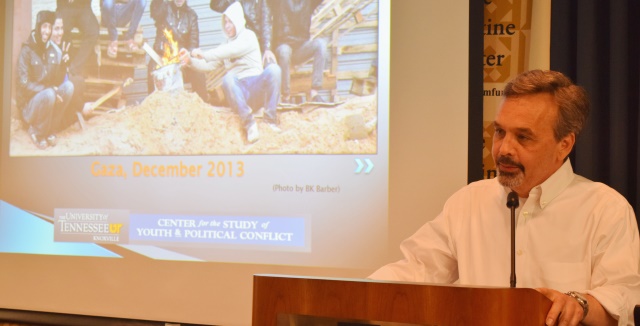
The storied generation of shabab (youth) who brought global attention to Palestine through their historically unparalleled activism during the first intifada are now adults – and nothing they fought for has come to pass. Dr. Brian K. Barber examines this situation by posing a series of questions about the first generation of Palestinians to live their entire lives under occupation.

Understanding the Current Palestinian Revolt: Its Context and Consequences for Palestinian Society

Since the fall of 2015 the world has witnessed a deadly spate of attacks on Palestinians by Israeli soldiers, police, and settlers, with over 160 Palestinians killed. The violence began with tensions at Al Aqsa mosque and spread quickly beyond East Jerusalem to the West Bank, Gaza, and Israel as soldiers employed shoot-to-kill tactics, claiming that their assailants, many of them youth at checkpoints, were threatening them with knife attacks. With the eruption of this violence coinciding with the 15-year anniversary of the second intifada, journalists, analysts, and scholars debated whether the Palestinian revolt could be called a “third intifada.” 

The Grinch who stole Palestinian Christmas

RAMALLAH, West Bank — Activist Hekmat Bessiso recently wrote on her Facebook page, “If the birthplace of Jesus Christ does not celebrate Christmas, who in the world will? I hope Palestine remains full of lights every December. Our struggle is enduring, and this is why we should preserve our joy.” Bessiso’s comments were in protest of a Nov. 23 declaration by the Council of Churches of Ramallah city and municipality to cancel the annual Christmas tree lighting and limit Christmas celebrations to religious rituals because of the current unrest. It said the decision had been made out of respect for victims and the wounded. As of Dec. 8, the number of Palestinians killed during the two-month-old intifada stood at 117.

Israeli colonisation is at the root of the violence

In the midst of what has become known in Israel as the “knifers’ Intifada”, an unusual scene unfolded in Ramat Gan, where many of the residents are Iraqi Jews. A small slender woman was protecting a man lying on the ground who was being pursued by a mob of 40 people, including a few soldiers, who wanted to lynch him

Palestine’s Intifada: the Process of Liberation is Irresistible

Yes, there is violence in the streets. It is the violence that fixates the viewer. Its context is set aside. Why are they using knives or why do they throw stones – that is the horizon of the question. The Western media is always surprised by the paroxysm of violence from the Palestinians – why do they resist?