Siraj Al-Quds School and Society for the Blind and Special Needs

The project of the Siraj Al-Quds School and Society for the Blind and Special Needs was aimed at promoting and improving the educational, social, rehabilitative and familial role of the visually impaired, special needs, and marginalized children. The project built capacities of their mothers and the staff working with them, and supplied the school with essential stationery, furniture, assistive tools, instruments, and capacity building courses.

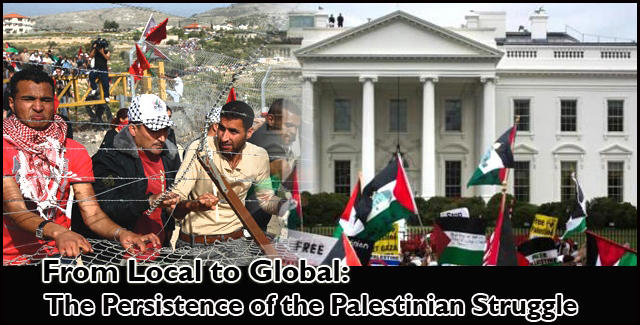
The 2014 Palestine Center Annual Conference – Panel IV

At the very center of the question of Palestine, both geographically and symbolically, is Jerusalem. Politically, economically and socially, the city is more divided than ever before despite being unified under an Israeli occupation. What changes have taken place in Jerusalem? How will this effect any potential agreement over the future status of the city? What is the future of the city and what can be done to protect the rights of Palestinians there?

From Local to Global: The Persistence of the Palestinian Struggle

Panel I: “Palestinian Refugees: Waiting to Return”; Panel II: “BDS: Activism and Strategy for Change”; Panel III: “U.S Mediation in the Future of Palestine”; Panel IV: “Jerusalem: A Core Issue”

Jerusalem Watercolors

Anna Rychter-May (1865-1955, b. Regensburg, Germany) was an early twentieth century artist known for her watercolors of Palestine. She lived and painted in Jerusalem from the 1920’s to 1955. This rare collection is loaned for exhibition to Gallery Al-Quds by Hanan and Farah Munayyer and the Palestinian Heritage Foundation.

Rudoren Misses Context in Crackdown Coverage

By Yousef Munayyer

Rudoren has a new article up published yesterday about the search for three missing Israeli settlers. There is so much lacking in the general coverage of recent events in Occupied Palestine, particularly in the under-reporting of the wide-ranging and brutal Israeli crackdown, that it is hard to know where to start. For this reason, I’m just going to point out one thing in the piece that is actually representative of a bigger problem with Rudoren’s coverage of the area.

The Politics of Identity in the Middle East

Panel I – Prospect for Palestinian Freedom: Assessing the “peace process” and exploring alternatives; Panel II – Sectarianism Spinning out of Control: The drivers and victims of hate; Panel III – Palestine in the Middle: Effects of regional conflict on the future of Palestine and its Politics; Panel IV – A Return to the Cold War?: The foreign policies of great powers and regional players

Back Stories: U.S. News Productions and Palestinian Politics

Studying how journalists work in Jerusalem, Bethlehem, Ramallah, and Nablus, and on the tense roads that connect these cities, Amahl Bishara demonstrates how the production of U.S. news about Palestinians depends on multifaceted collaborations, typically invisible to Western readers. She focuses on the work that Palestinian journalists do behind the scenes and below the bylines.

Palestine: The Israeli Occupation and the Limits of the Palestinian Economy

The IMF, World Bank and UN have recently concluded that the Palestinian Authority (PA) is now able to conduct the sound economic policies expected of a future well-functioning Palestinian state, given its solid track record in reforms. However, several recent developments have posed serious risks to the PA’s state-building capacity, and are also jeopardizing social stability in the Palestinian territories.