Benjamin Netanyahu and the Ideological Incongruence of Liberal Zionism

The last few years have been devastating for Palestinians. In the last two alone, we have seen assaults on peaceful protestors in Gaza, the adoption of the controversial Nation State Law, the agreement with Trump to move the U.S. embassy to Jerusalem, a rapid increase in illegal settlement building, and the illegal demolition of several dozen Palestinian homes located near Israel’s apartheid wall.

Why Trump is wrong to cut funding to the UN agency which looks after Palestinian refugees

As with the decision to recognise Jerusalem as Israel’s capital, US President Donald Trump surely had his electoral base in mind when deciding to slash funding for the United Nations Relief and Works Agency (UNRWA), which looks after Palestinian refugees. Trump’s decision, however, can not be divorced from a long-standing Israeli animus towards the agency, whose current difficulties have been broadly welcomed by Israeli politicians – including Prime Minister Benjamin Netanyahu.

Palestinians sue Trump adviser, Netanyahu for terrorism

A group of US citizens and Palestinian nationals is suing Israeli Prime Minister Benjamin Netanyahu and key members of US President Donald Trump’s administration for perpetrating and enabling war crimes. Their lawsuit, filed in federal court in Washington, DC, on Wednesday, alleges a money laundering scheme that involves the US defendants raising charitable donations to send to Israeli government leaders.

The Rise of the Israeli Right and the Censorship of History

By Palestine Center Interns — Mirvat Salameh and Abby Massell

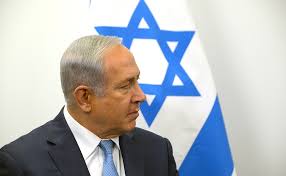
Benjamin Netanyahu has established the most conservative government in Israeli history that is responsible for launching multiple and brutal military assaults on Gaza, expanding illegal settlements, and pushing the declaration of Jerusalem as the capital of Israel. As leader and long-term member of Israel’s Likud party, Netanyahu has positioned the party away from its formerly secular and centrist position and toward hard-line right-wing policies. Aside from the surge in settler-violence in the last year, a recent decision to restrict access to Israel’s National Archives has created controversy among Israeli historians and human rights activists.

How to (almost) eliminate the U.S. partisan divide on the Middle East

A year ago, I wrote an article with Katayoun Kishi on this website about the emerging partisan divide in American public attitudes on issues related to Israel and the Middle East. Some of the findings were striking, underpinned by demographic changes in America, especially within the Democratic Party. Since then, these observations have become conventional wisdom, thanks in large part to Israeli Prime Minister Benjamin Netanyahu’s plunge into our political divide over the Iran nuclear deal.

What’s next for Middle East peace?

US Secretary of State John Kerry came back from his recent trip to Jerusalem and Ramallah on Nov. 24 empty-handed and, for the first time for this extreme optimist, completely disillusioned with the stalled Israeli-Palestinian negotiations. He found Israeli Prime Minister Benjamin Netanyahu even more rejectionist than before, and Palestinian President Mahmoud Abbas weaker and more depressed. A senior US State Department official dealing with the Middle East described to Al-Monitor the current situation in very bleak terms.

A Top Israeli Diplomat Publicly Admits What Netanyahu Won’t

Tzipi Hotovely might not be a great diplomat, but her blunt communication style can be a great help in clarifying matters. This was certainly the case with her interview with the Times of Israel, which was published on September 27. In it, Hotovely, Israel’s Deputy Minister of Foreign Affairs, openly declares that Israel has no intention of handing any of the West Bank over to Palestinian control.