2016 Palestine Center Annual Conference – Panel 1

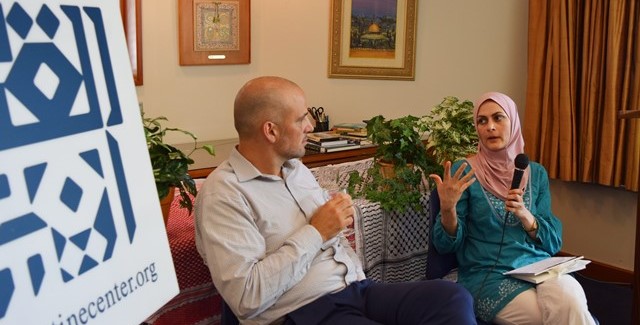
In this panel we look back at salient developments in the Middle East over the past century, from Sykes-Picot to the “Arab Spring and BDS, to see the deep impact they have had on Palestinian national aspirations. Panelists include Dr. Jenab Tutunji, Phyllis Bennis, Dima Khalidi, and Rami Khouri.

Against Israel’s Colonial Tide: Palestinian Initiatives to Shape Their Future

This panel examines the intersection of Israeli policies of occupation and containment which prevent Palestinian self-determination, with a focus on the experience for Palestinians of living under occupation in Jerusalem and Gaza and the ways Palestinians and their supporters are organizing politically, economically and culturally to protect their human rights and work towards a different future.


Report: Recent rise in deportations result of Israeli strategy to stifle solidarity with Palestinians

An analysis of UN data show that a recent surge in reports of deportations of individuals attempting to transit through Israel to work with Palestinians is apparently the result of an official strategy implemented by the Israeli government beginning in January of this year, announced the Euro-Mediterranean Human Rights Monitor today.

2016 Summer Intern Panel: “Overcoming Restrictions: Resistance through Publication & Expression”

In the concluding panel of the 2016 Summer Intern Lecture Series, Dr. William Youmans and Ms. Laila El-Haddad examine the less concrete but equally powerful restraints on the mobility of ideas in the Palestinian context. These include Israel’s suppression of political and literary expression, manipulation of the news, media blackouts, and outright censorship. As writers and social media experts, these panelists offer their experiences in the use of written and electronic media as powerful tools in the spread of ideas and resistance to Israel’s polities.

“Forbidden Colors” Coming to Light

By Palestine Center Interns — Sarah Dickshinski, Abby Massell, Zoë Reinstein, and Mirvat Salameh

This summer, Gallery Al-Quds presents “Forbidden Colors,” examining 30 artists’ responses to various forms of censorship or political pressure — specifically, the 1980 Israeli law forbidding artwork composed of the four colors of the Palestinian flag: red, green, black, and white. That the “forbidden colors” of the Palestinian flag still carry such a stigma indicates that exhibitions that bring exposure to this continuing issue are of the utmost importance. We are reminded that art is perhaps the most powerful tool of resistance and revolution, and the artists featured in this show exemplify this in the works they contributed.

Is it an occupation or an “occupation”?

By Zeina Azzam

One is hard pressed to ask, what is the problem in calling the Occupied Palestinian Territories just that, territory occupied by Israel in the 1967 war? This is the exact terminology of Amnesty International. Oxfam uses Occupied Palestinian Territory. The Israeli human rights organization B’Tselem employs Occupied Territories. The United Nations Office for the Coordination of Humanitarian Affairs has adopted occupied Palestinian territory (oPt). Even the US Department of State refers to The Occupied Territories.

Flint and Gaza: Water Crises of Colonialism

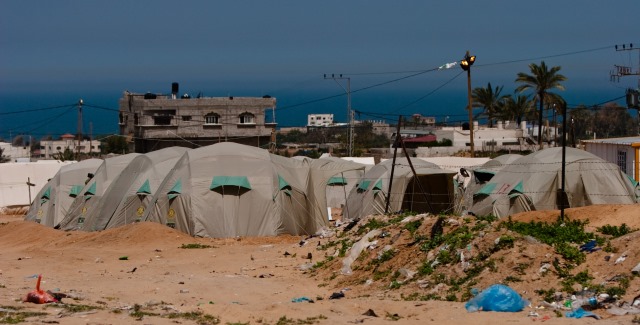
The American public has been shocked to discover that the people of Flint, including children, have been being poisoned with lead by their municipal water supply since April of 2014. The questions of who took the decision to draw water from the heavily polluted Flint River, and why, have been fiercely debated in recent months. But one thing seems clear. The Flint public was deprived of an effective voice and had difficulty being heard. In essence, Flint’s population was under colonial rule because its local democratic institutions were sidelined by the state. For similar reasons, the population of Gaza, under Israeli occupation and blockade, is facing a severe water crisis. In both places, local people have been deprived of autonomy, and they face a severe public-health crisis as a result.