Permission To Narrate

– Edward Said

The late Palestinian scholar, Edward Said, remarked that Palestinians had been denied permission to narrate their history and speak of the day-to-day experiences of life in the margins. Here, we reclaim that permission to narrate our own stories.

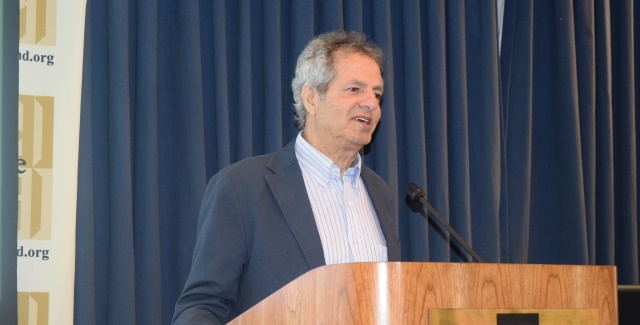
Reading Jeff Halper’s ‘War Against the People: Israel, the Palestinians and Global Pacification’

The review below was published in the current issue of Journal of the Society for Contemporary Thought and Islamicate World. I am posting it here because I believe that Jeff Halper’s book deserves the widest possible reading. It explains clearly and convincingly one of the deepest and least understood roots of Israel’s diplomatic support throughout the world, which is its role as a niche arms supplier and influential tactical specialist in waging wars against peoples who dare offer resistance to state power as variously deployed against them.

How the World’s View of the Palstine-Israel Conflict Is Changing Dramatically

As Israelis and Palestinians continue to battle to the death in their contested land, it is important to note a historic shift in how the minds, hearts, and public politics of the world perceive the Palestine issue and a just Palestinian-Israeli-Arab peace accord that assures the equal rights of all parties. In many arenas and dimensions, far from dropping off the global political map, Palestinian rights are popping up in more venues around the world, with a regular public focus on countering and even sanctioning Zionist excesses and criminal actions, such as expropriating and colonizing occupied Arab lands. 

Anti-Zionism Can and Should Be Anti-Racism

Palestinian self-determination is a crucial step in ending the logic of racialization and civilizational hierarchy that produced anti-Semitism and genocide. This logic measures Palestinian life as less valuable than Israeli life. To say otherwise is to suggest that standing up for Palestinian rights is somehow anti-Jewish. Critiquing this logic is a moral responsibility.

Palestine’s Day of the Land, Yawm al-Ard, 1976-2016: Commemorating Forty Years

By Zeina Azzam

Forty years ago today, the Palestinian citizens of Israel rose up against the Israeli government, which had just announced new and extensive land expropriation plans in the Galilee. Palestinians called for a general strike on March 30, 1976 to protest this latest manifestation of an ongoing policy of land confiscation. The protests turned bloody after violent confrontations erupted between the Palestinians and the Israeli army and border police. In the end, six Palestinians were killed, tens were wounded, and hundreds were arrested.

Being Palestinian: Personal Reflections on Palestinian Identity in the Diaspora

Being Palestinian: Personal Reflections on Palestinian Identity in the Diaspora, edited by Yasir Suleiman, contains over 100 contributions of prose and poetry by men and women spanning several generations, most of whom live in exile in the United States and the United Kingdom. Sharif S. Elmusa, one of the book’s contributors and an established author and poet in his own right, provides an overview of the book and reads selected excerpts. 

UC Regents’ statement is unenforceable

Today the University of California (UC) Board of Regents adopted a Report and Statement of Principles against Intolerance that states: “Anti-Semitism, anti-Semitic forms of anti-Zionism, and other forms of discrimination have no place at the University of California.” In doing so, the Regents rejected a blanket conflation of anti-Semitism with anti-Zionism.

How impunity defines Israel and victimises Palestinians

Abed al-Fattah Yusri al-Sharif was killed. In the style typical of Israeli aggression against unarmed Palestinians, he was first wounded after allegedly attempting to stab an Israel occupation soldier in the occupied city of Hebron. He lies on his back, his arms stretched across the road, and his head moving about. A soldier confers with his superior officer, before moving to “confirm the kill” – a term used by the Israeli military in reference to field executions of Palestinians.