Is Trump widening a rift between the evangelicals and Mideast Christians?

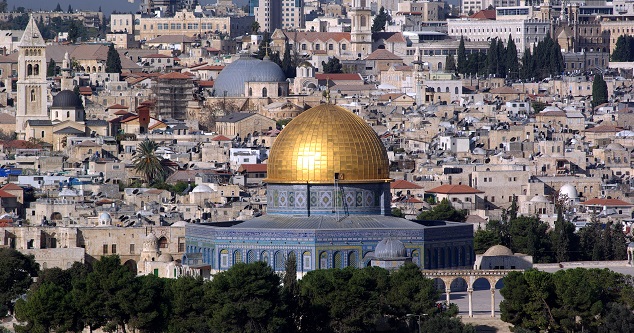
When President Donald Trump announced in December he would recognize Jerusalem as the capital of Israel and call for the U.S. embassy to be moved there, some of his loudest cheerleaders were American evangelicals. Members of Trump’s unofficial evangelical advisory board were consulted on the decision, evangelical-led groups such as Christians United for Israel advocated for the change, and conservative Christian leaders such as Jack Graham were quick to applaud the move on Twitter.

By excluding Palestinian voices from Jerusalem debate, cable news avoided addressing Israeli rights abuses

Palestinian voices were largely absent from American cable news’ coverage of President Donald Trump’s decision last week to recognize Jerusalem as the capital of Israel. By turning to their stable of regular political commentators to weigh in on the unprecedented move, the three major news networks – CNN, MSNBC, and Fox News – excluded those most impacted by the decision and avoided difficult questions about Israeli rights abuses, Palestinian human rights lawyers and activists say.

Arab leaders plan major response to Trump’s Jerusalem move

Arabs and Muslims are responding with both actions and reactions to the decision of the Donald Trump administration to recognize Jerusalem as the capital of Israel. While public protests have engulfed countries as close as Jordan and as far away as Morocco and Indonesia, political leaders are searching for actions they can take to respond to the unexpected large public protests and demands for action.

Jerusalem: Communities Leading Change

Fayrouz Sharqawi,  Advocacy Director at Grassroots International, discusses the recent movement for Al Aqsa and the necessity of organizations like Grassroots Jerusalem to build a cohesive political platform through which Jerusalemites can voice their demands and bring attention to the indigenous and independent Palestinian economy outside of the international aid and NGO system.

The Palestinian Struggle: Adversity on All Fronts 

The 2017 Palestine Center Annual Conference addresses vital issues related to the 50 year Israeli occupation, coordination of the Palestinian Authority with the occupation, and Israel’s human rights violations. Panelists also examine the continuing problem of representation and media bias when it comes to the Palestinian issue, and analyze the status of Jerusalem, situation of Gaza, and persistence of the Boycott, Divestment, and Sanctions movement with its challenges and successes in the United States.

Interview with Dorit Naaman about “Jerusalem, We Are Here”

By Palestine Center Interns

Dorit Naaman, film and media professor at Queen’s University, directed and produced an interactive documentary called, “Jerusalem, We Are Here”. The purpose of this project is to restore the lost or stolen homes, mainly in Jerusalem, of pre-1948 Palestine, if not physically then through the communicative power of art and new media. Until this day, houses are being demolished in Palestine adding another facet to the fact that the Nakba never ended. Acknowledging the existence of Palestinian homes, as this project does, is a form of resistance against cultural erasure. This interview highlights the importance of recognizing the past in Palestine, how it lives in the reality of our present, and challenges our future.

“Jerusalem, We Are Here”

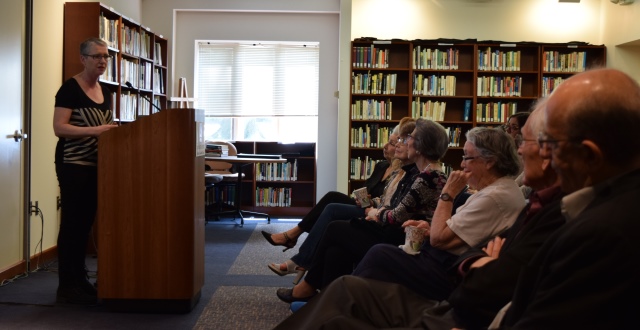
Presented by director and producer Dorit Naaman, Jerusalem, We Are Here is an interactive documentary that digitally brings Palestinians back into the Jerusalem neighborhoods from which they were expelled in 1948. Focusing primarily on the neighborhood of Katamon, Palestinian participants probed their families’ past and engaged with the painful present.