2012 Edward Said Memorial Lecture

“A Deliberate Cruelty: Rendering Gaza Unviable” – Dr. Sara Roy leads the discussion on the economic and social policies that have developed the Gaza Strip and on U.S. foreign aid to the region

“A Deliberate Cruelty: Rendering Gaza Unviable” – Dr. Sara Roy leads the discussion on the economic and social policies that have developed the Gaza Strip and on U.S. foreign aid to the region

Panel I – Revolution: Where It Came From and Where It Is Heading, Panel II – Palestinian National Strategy: Evaluating and Re-Evaluating, Panel III – Covering the Uprisings: Perspectives, Biases and the role of the Media, Panel IV – U.S. Foreign Policy toward a Revolutionary Region: Opportunities and Responsibilities

Panel I – The Changing Face of Jerusalem; Panel II – Changing Resistance Tactics: Violence, Non-Violence and the Battle for Legitimacy; Panel III – Regional Dynamics: Carrying the Torch?; Panel IV – Peace Process: Déjà vu all over again?

It is the intention of this conference to underscore the reality we are facing by: first, examining and illuminating current Palestinian existence in historic Palestine; second, by truthfully and candidly pursuing the historical process of the Judaization of the country; and third, by exploring the roles available to people seeking justice for the Palestinian people.
The Middle East is vital to global stability and crucial to U.S. interests. Palestine, Israel, Iraq, Iran, Lebanon and Syria have emerged as a centerpiece of American foreign policy, influencing how the United States is viewed in the region and around the world. Because of the gravity of conditions in the region, specifically in the mentioned countries and their vital importance, in similar ways or in their own unique way, the United States is facing one of its most difficult and significant international challenges in decades. With most events in the region having been set in motion by American decisions and actions, the United States has both a national and a moral interest to change course.
Panel I – Mechanics of “Politicide:” Palestinians since 1967; Panel II – Consequences of “Politicide”; Panel III – The “Politicide” of Others: Do Palestinians Have Options
against “Politicide?”
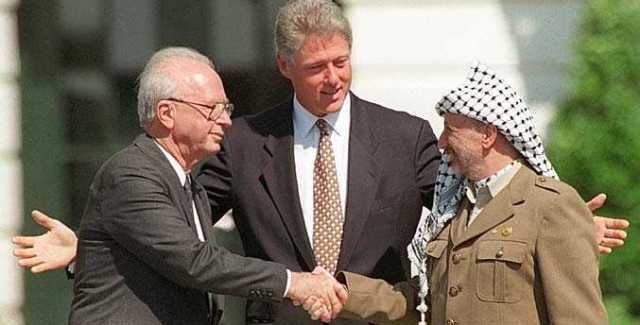
On 27 October 2006, experts and scholars studied the effect political negotiations and events on the ground have had on life in the Occupied Palestinian Territory since the start of the Oslo process. Panelists analyzed the obstacles facing a two-state solution and discuss strategies to create a viable end to the Israeli-Palestinian conflict.
PALESTINE CENTER URGES INTERNATIONAL INTERVENTION IN GAZA AND LEBANON For Immediate Release Contact: Samar Assad (202) 338-1290 Washington, DC; July 13, 2006 – The Palestine Center calls on the international community to bring an end to Israel’s military escalation against Palestinian and Lebanese civilians. Israel’s military campaign has resulted in a large number of civilian … Read more
Palestine Center Denounces Passage of H.R. 4681 For Immediate Release Contact: Samar Assad (202) 338-1290 Washington, DC (23 May 2006) – The Palestine Center strongly deplores today’s passage of House Resolution 4681, the Palestinian Anti-Terrorism Act of 2006, in the U.S. House of Representatives. The central provision of this resolution prohibits the United States from … Read more

Through educational events, humanitarian support, and cultural preservation, the Jerusalem Fund is helping build the movement for Palestinian liberation.
Connect
The Jerusalem Fund
2425 Virginia Ave NW
Washington, DC 20037
(202) 338-1958