“Forbidden Colors” Coming to Light

By Palestine Center Interns — Sarah Dickshinski, Abby Massell, Zoë Reinstein, and Mirvat Salameh

This summer, Gallery Al-Quds presents “Forbidden Colors,” examining 30 artists’ responses to various forms of censorship or political pressure — specifically, the 1980 Israeli law forbidding artwork composed of the four colors of the Palestinian flag: red, green, black, and white. That the “forbidden colors” of the Palestinian flag still carry such a stigma indicates that exhibitions that bring exposure to this continuing issue are of the utmost importance. We are reminded that art is perhaps the most powerful tool of resistance and revolution, and the artists featured in this show exemplify this in the works they contributed.

Forbidden Colors: Artists and Censorship

Artists from the United States and abroad create work in all media exploring the concept of artists’ responses to various forms of censorship or political pressure specific to artistic production. The show takes its name from a 1980 Israeli law forbidding artwork of “political significance,” which banned art composed of the four colors of the Palestinian flag: red, green, white, and black.  Palestinians were arrested for creating or displaying such artwork.  The ban was lifted after the signing of the Oslo Accords in 1993.

The Eye of the Blossom

“Growing up in a garden of flowers … literally, as a child I was fascinated, taken by its diversity in shape and color, and feasted my eyes and never ignored…. As a photographer I always carried my camera with me and always on the lookout for flowers.  No matter what assignments I had I always noticed the flower everywhere. 

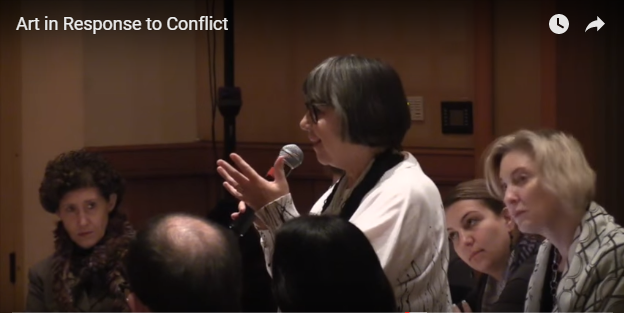
Hear Dagmar Painter’s question at the Middle East Institute’s “Art in Response to Conflict” seminar

In February 2016, The Middle East Institute co-hosted a panel discussion exploring the value and impact of the arts in conflict zones. The panel was organized with the Media Lounge at the College Art Association’s annual meeting in Washington, D.C.

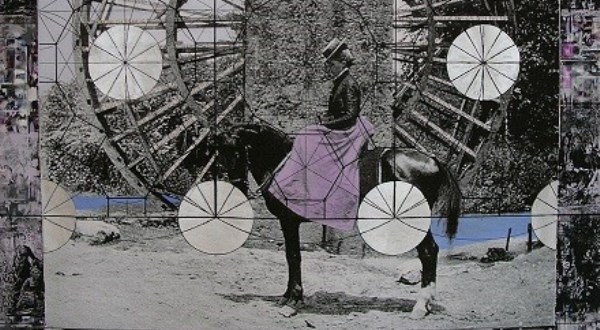
Cryptographic by Doris Bittar

Artist Doris Bittar’s latest works explore layers and patterning, whether through her Conversations with Modernism, paintings in which she examines “how a student of art who is also a colonial subject converses with the more recent Masters”  or Walking Patterns, 3-dimensional assemblages of remnants collected on walks in the Middle East and California, overlaid with invented, faintly arabesque lattice patterning.