A Tribute to Dr. Halim Barakat

In this tribute speakers, Dr. Judith Tucker ( Professor of History, Georgetown University), Dr. Edmund Ghareeb (Senior Scholar, Palestine Center), and Dr. Beshara Doumani (Professor of History, Brown University) reflect on the intellectual contributions of Dr. Halim Barakat, retired Research Professor of Society and Culture at The Center for Contemporary Arab Studies of Georgetown University.
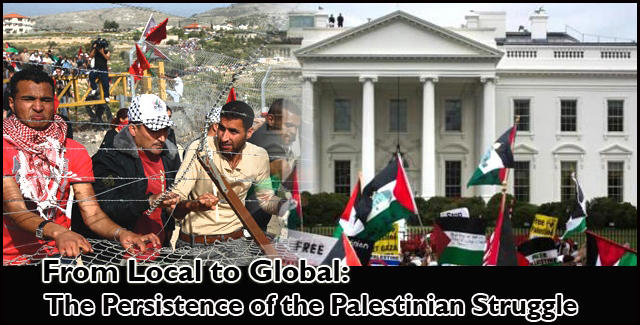
From Local to Global: The Persistence of the Palestinian Struggle

Panel I: “Palestinian Refugees: Waiting to Return”; Panel II: “BDS: Activism and Strategy for Change”; Panel III: “U.S Mediation in the Future of Palestine”; Panel IV: “Jerusalem: A Core Issue”

The Politics of Identity in the Middle East

Panel I – Prospect for Palestinian Freedom: Assessing the “peace process” and exploring alternatives; Panel II – Sectarianism Spinning out of Control: The drivers and victims of hate; Panel III – Palestine in the Middle: Effects of regional conflict on the future of Palestine and its Politics; Panel IV – A Return to the Cold War?: The foreign policies of great powers and regional players

Which Way Forward? U.S.-Middle East Relations After the Election

Panel I – Revolution: Where It Came From and Where It Is Heading, Panel II – Palestinian National Strategy: Evaluating and Re-Evaluating, Panel III – Covering the Uprisings: Perspectives, Biases and the role of the Media, Panel IV – U.S. Foreign Policy toward a Revolutionary Region: Opportunities and Responsibilities

A Turning Point: For Palestine and the Region

Panel I – Revolution: Where It Came From and Where It Is Heading, Panel II – Palestinian National Strategy: Evaluating and Re-Evaluating, Panel III – Covering the Uprisings: Perspectives, Biases and the role of the Media, Panel IV – U.S. Foreign Policy toward a Revolutionary Region: Opportunities and Responsibilities

The Erasure of Palestine

It is the intention of this conference to underscore the reality we are facing by: first, examining and illuminating current Palestinian existence in historic Palestine; second, by truthfully and candidly pursuing the historical process of the Judaization of the country; and third, by exploring the roles available to people seeking justice for the Palestinian people.

The U.S. Must Adopt a Policy of Conflict Resolution rather than Conflict Management in the Middle East

13 June 2002 FOR IMMEDIATE RELEASE Contact: Samar Assad: 202-338-1290 The U.S. Must Adopt a Policy of Conflict Resolution rather than Conflict Management in the Middle East By continuing on the path of conflict management, the United States has failed to bring an end to Palestinian-Israeli violence and has failed to embark on the path … Read more