Permission To Narrate

– Edward Said

The late Palestinian scholar, Edward Said, remarked that Palestinians had been denied permission to narrate their history and speak of the day-to-day experiences of life in the margins. Here, we reclaim that permission to narrate our own stories.

Whither the “Children of the Stone”? An Entire Life under Occupation
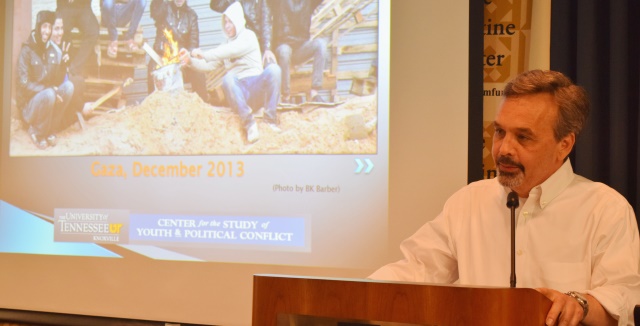
The storied generation of shabab (youth) who brought global attention to Palestine through their historically unparalleled activism during the first intifada are now adults – and nothing they fought for has come to pass. Dr. Brian K. Barber examines this situation by posing a series of questions about the first generation of Palestinians to live their entire lives under occupation.

Interview with Dr. Yasser Abu Jamei

In the interview that follows, Abu Jamei talks about manifestations of trauma, methods of treatment, and how mental health professionals care for themselves and each other in an environment with little break from sustained conflict. Ultimately, his is a message of hope for the power of resilience, recovery, and perseverance in Gaza.

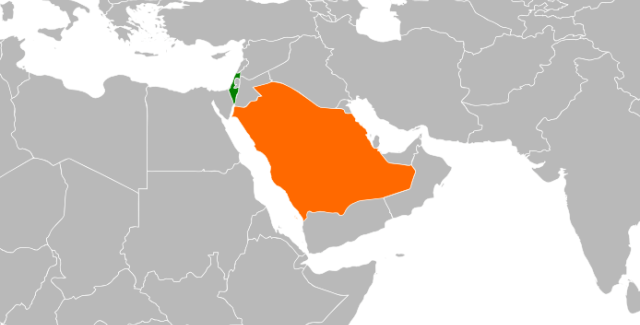
DC meeting between Israel and Saudi Arabia marks end of Arab Peace Initiative and two-state solution

For decades, Saudi Arabia has been an advocate of Palestinian statehood rights and a critic of the Israeli occupation of the West Bank and Gaza. Saudi Arabia’s commitment to Palestine has defined the geopolitical contours of the Middle East for decades. But now that the Iran nuclear deal has been struck and as the war in Syria ravages on, those political lines are being redrawn, bringing together unexpected bedfellows: Saudi Arabia and Israel.

Here’s what happened when some famous writers went to visit some hardcore Jewish settlers

HEBRON, West Bank — Arriving aboard a tour bus, accompanied by a former Israeli machine-gunner turned human rights activist, an international delegation of pretty famous writers came to the heart of this old city to see for themselves how 850 hardcore Jewish settlers, protected by 650 young Israeli soldiers, live among 200,000 angry Palestinians.


The incremental annexation of Palestine

Israel’s justice minister announces a plan to apply Israeli law to parts of the West Bank, or in other words, annexation. By taking an incremental approach, she stands a pretty good chance of succeeding. Success, however, will expose the true nature of Israel’s discriminatory regime.

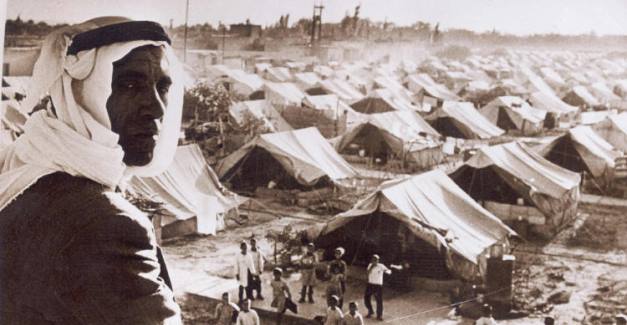
Nakba Never Forgotten

The Nakba Museum began as the Nakba Museum Project of Memory and Hope, a series of travelling exhibits presented throughout the United States. It is comprised of artwork, photography, oral history, and graphs. All artwork is made by Palestinians living in the West Bank.

New UN database of companies complicit in Israel’s occupation

Finally, after years of toothless UN condemnations of settlements – which are a flagrant violation of international law and a major obstacle to justice and peace in the region – there will be an official UN list that names and exposes businesses that have for decades enabled and profited from Israel’s theft of Palestinian land and other human rights abuses.

Lessons in Resistance from the Palestinian Village of Nabi Saleh

Nabi Saleh is a Palestinian village facing one of the more imposing structures of the Israeli occupation. Opposite the town, the Israeli settlement of Halamish is perched upon a hill that once served as fertile farmland for local residents. Cookie-cutter apartment buildings, military structures, and even a swimming pool now dot the hill across from the village, where Palestinian mothers scoop used dishwater into buckets for reuse because of frequent shortages caused by Israel’s water policies.

What Zionism has meant for Palestinians

There is a lot of discussion about Zionism at the moment: how to define it, what it means to be anti-Zionist and whether that equates to antisemitism, and so on. But there has been a notable, and instructive, absence in these debates: an understanding of what Zionism has meant for Palestinians.