Permission To Narrate

– Edward Said

The late Palestinian scholar, Edward Said, remarked that Palestinians had been denied permission to narrate their history and speak of the day-to-day experiences of life in the margins. Here, we reclaim that permission to narrate our own stories.

Economic Collapse in East Jerusalem: Strategies for Recovery
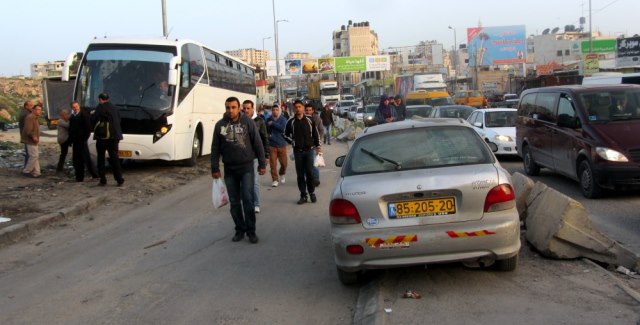
In an unusual move, and after years of neglect, American and European delegations and development agencies have recently been visiting East Jerusalem and showing an increased interest in ‘doing something’ about its deteriorating socioeconomic conditions. Moreover, the Palestinian Authority (PA) is, after a prolonged silence, working on updating the Strategic Multi-Sector Development Plan for East Jerusalem 2011-2013.

Expel and Exploit: The Israeli Practice of Taking over Rural Palestinian Land

This report tells the history of the process of fragmentation imposed on Palestinian rural land in the West Bank through a case study of three villages in the Nablus District – ‘Azmut, Deir al-Hatab and Salem. What these communities have experienced since 1980, when Israel established the Elon Moreh nearby, is but one illustration of broader developments taking place throughout the West Bank. Their story is similar to that of hundreds of Palestinian communities on whose lands Israeli settlements were established.

President Trump’s options for Israeli-Palestinian dealmaking

The Israeli-Palestinian conflict has defied the peacemaking efforts of successive U.S. presidential administrations. As the incoming Trump administration considers how it will attempt to resolve the conflict, this chapter presents three possible approaches to negotiations—a provocative, high-risk ‘top-down’ approach that would focus on the contested status of Jerusalem; a more measured ‘bottom-up’ approach that would work with regional players to change the situation on the ground; and a summit-driven ‘outside-in’ approach that would establish internationally supported terms of reference for negotiating a two-state solution. All three options are likely to have critical political consequences for the Trump administration, but if there is a desire to break the stalemate of distrust in the Middle East, their potential merits should be considered.

‘We Are Orphans Here’

The Palestinian Authority has no jurisdiction there: The camp is, according to Israeli law, inside Israel, and the people who live there are Jerusalem residents, but they are refugees in their own city. Residents pay taxes to Israel, but the camp is barely serviced. There is very little legally supplied water, a scarcely functioning sewage system, essentially no garbage pickup, no road building, no mail service (the streets don’t even have names, much less addresses), virtually no infrastructure of any kind.

Jimmy Carter: America Must Recognize Palestine

ATLANTA — We do not yet know the policy of the next administration toward Israel and Palestine, but we do know the policy of this administration. It has been President Obama’s aim to support a negotiated end to the conflict based on two states, living side by side in peace. That prospect is now in grave doubt. I am convinced that the United States can still shape the future of the Israeli-Palestinian conflict before a change in presidents, but time is very short. The simple but vital step this administration must take before its term expires on Jan. 20 is to grant American diplomatic recognition to the state of Palestine, as 137 countries have already done, and help it achieve full United Nations membership.

2016 Palestine Center Annual Conference – Panel 1

In this panel we look back at salient developments in the Middle East over the past century, from Sykes-Picot to the “Arab Spring and BDS, to see the deep impact they have had on Palestinian national aspirations. Panelists include Dr. Jenab Tutunji, Phyllis Bennis, Dima Khalidi, and Rami Khouri.

Israel, Palestinians prepare for Trump era

Shock and dismay prevailed among the leadership of the Palestinian Authority (PA) following Donald Trump’s election. During the US election campaign, most of the Palestinian official spokespeople claimed that Hillary Clinton and Donald Trump were equally bad news for Palestinian interests. Yet beyond these claims there was a clear preference for Secretary Clinton, out of belief that she could engage with the international community on a two-state solution process. Trump’s election victory shuttered any hope of such prospects.