Permission To Narrate

– Edward Said

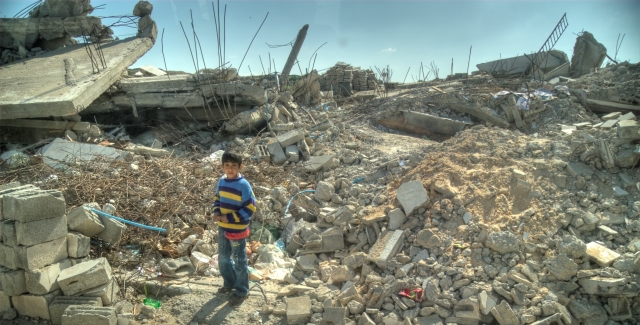
The late Palestinian scholar, Edward Said, remarked that Palestinians had been denied permission to narrate their history and speak of the day-to-day experiences of life in the margins. Here, we reclaim that permission to narrate our own stories.

2017 Hisham Sharabi Memorial Lecture: “Mahjar Writers on the Subject of Palestine”
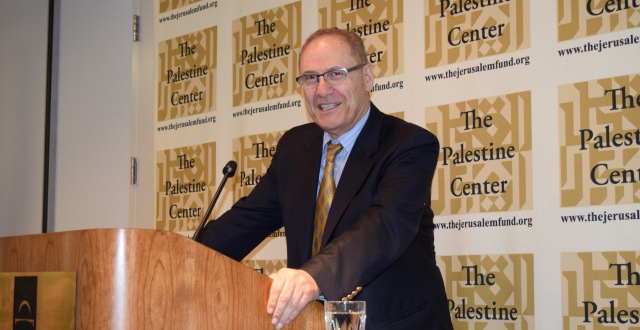
In honor of the legacy of Dr. Hisham Sharabi, Dr. Edmund Ghareeb discusses the contributions of early Arab-American “men of letters” of the Mahjar press, whose writings shed light on the perceptions and positions held within these communities on the issues of Palestine and Arab nationalism.

Interview with Dorit Naaman about “Jerusalem, We Are Here”

By Palestine Center Interns

Dorit Naaman, film and media professor at Queen’s University, directed and produced an interactive documentary called, “Jerusalem, We Are Here”. The purpose of this project is to restore the lost or stolen homes, mainly in Jerusalem, of pre-1948 Palestine, if not physically then through the communicative power of art and new media. Until this day, houses are being demolished in Palestine adding another facet to the fact that the Nakba never ended. Acknowledging the existence of Palestinian homes, as this project does, is a form of resistance against cultural erasure. This interview highlights the importance of recognizing the past in Palestine, how it lives in the reality of our present, and challenges our future.

Feminist Art Shows to See in Honor of Women’s History Month

“IARS Women’s Invitational Exhibition 2017” at the Eiseman Center of Performing Arts and Corporate Presentations. This Women’s Invitational features the work of 10 minority women artists, all first generation Americans. The works reflect these women’s strong bonds to their heritage and to their experiences living in the US, with unique techniques, narratives, and viewpoints.

“Protection Amid Chaos: The Creation of Property Rights in Palestinian Refugee Camps”

Protection Amid Chaos follows people as they develop binding claims on assets and resources in challenging political and economic spaces. Focusing on Palestinians living in refugee camps in Lebanon and Jordan, it shows how the first to arrive developed flexible though legitimate property rights claims based on legal knowledge retained from their homeland, subsequently adapted to the restrictions of refugee life.

Omar Barghouti on the Successes and Challenges of BDS

In conjunction and co-sponsorship with the U.S. Campaign for Palestinian Rights, Omar Barghouti reflects on the growing successes of the Palestinian-led boycott, divestment, and sanctions (BDS) movement, which he helped to found. He also addresses future challenges most saliently presented by growing repression campaigns against this movement on the state, campus, and individual level.

How Israel’s violent birth destroyed Palestine

Two dates are often used to frame the so-called Palestinian-Israeli conflict: Nakba Day on May 15 and Naksa Day on June 5. Nakba means ‘catastrophe’, a reference that was commonly used to describe the violence meted out against the Palestinian Arab population during the period of British colonialism in Palestine, which extended from 1917 to 1948. The term Nakba morphed to define the zenith of British and Zionist colonisation and settlement in Palestine, which ultimately led to the ethnic cleansing of the Palestinian population from their historic homeland in 1947 and 1948.