
Permission To Narrate

– Edward Said

The late Palestinian scholar, Edward Said, remarked that Palestinians had been denied permission to narrate their history and speak of the day-to-day experiences of life in the margins. Here, we reclaim that permission to narrate our own stories.

50 years since Khartoum, the Arab world united against the Palestinians
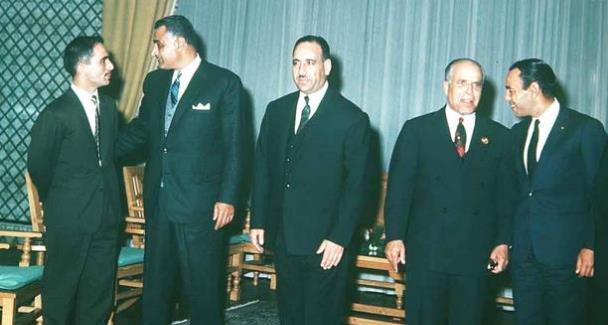
The United Arab Emirates has been using Israeli security companies for years to build their own security state. They have been assisting Mossad with deporting Fatah and Hamas exiles back to face Israeli courts. The Saudis appear to have resurrected Prince Bandar’s plan of intimate ties with Tel Aviv, only to counter Iran. The Egyptian state, under military rule once more, is as close to Israel as it has ever been and is far more brutal than Israel in preventing aid entering Gaza. Only Qatar, Iran and Turkey seem at all interested in freeing the Palestinian people.

“In Search of a Prophet – Kahlil Gibran: An Unparalleled Guide for Our Times”

Paul-Gordon Chandler takes the listener on a fascinating journey through the all-embracing spirituality of Kahlil Gibran, the early 20th century Lebanese-American poet artist and mystic, author of the bestselling book The Prophet. He explores how Kahlil Gibran, a supreme East-West figure, can be a much-needed guide for our time, related to peace, harmony and building bridges between the creeds of the Middle East and West.

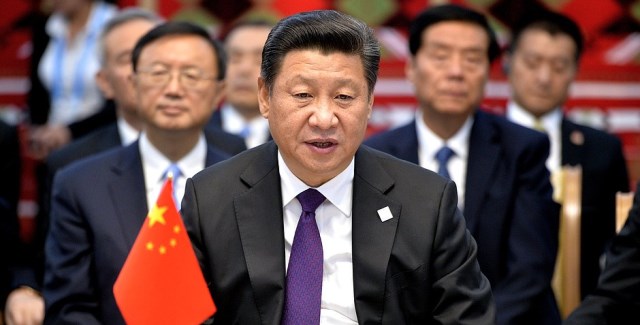
China’s New Plan for Israel-Palestine

Historically China portrayed itself as on the side of Palestinians, despite claims of neutrality and non-interventionism. Yet after the end of the Mao era and China’s endorsement of an “open door” policy, up to its participation in the Madrid Peace Conference in 1991, Chinese policy toward Israel and Palestine became more aligned with the international community and the status quo. This has been particularly the case since President Xi Jinping’s rise to power in 2013, with Xi taking an active role in proposing plans for peace.

In-Depth: Thirteen Years Later, The ICJ Advisory Opinion on the Wall

The ICJ issued five main legal conclusions: i) that the construction of the Wall in the Occupied Palestinian Territory and its associated regime violate Israeli obligations under international law; ii) that Israel must cease further construction, re-route or remove the completed sections from within the West Bank, and completely terminate the permit regime associated with it; iii) that Israel must restore all Palestinian properties confiscated for the Wall construction and pay damages for all losses; iv) that all states must ensure compliance with humanitarian law by not recognizing the wall regime and by ceasing any aid to Israel that supports it; and finally, v) that all states and the UN must take action to terminate the illegal situation arising from the construction of the Wall.

Arab League and Palestinian Authority to block Israeli bid for UN Security Council seat

“The irony is that Israel has spent many years delegitimizing the UN and torpedoing its efforts of implementing international law regarding the situation in Palestine,” Baroud said. “The strategy of elevating its status at the UN can been seen as an admission of failure of that antagonistic strategy. But if Israel wins that seat, it is likely to use the new position to strengthen its occupation of Palestine, as opposed to adhere to international law. With the US on its side, Israel would labor to prevent any efforts aimed at criticizing its illegal settlement policies or any other illegal practices.”

“Colored Water: Dixie Through Egyptian Eyes”

This memoir offers uncommon and thought provoking cross-cultural observations on segregation, the “American Dream”, race, identity, science, sexuality, love, academia, religion, tradition, personal freedom, social status, and class from the perspective of Dr. Ashraf El-Bayoumi, who was living in America for the first time in 1950s, pursuing his post-graduate studies in chemistry in Florida.

The Palestinian Struggle: Adversity on All Fronts 

The 2017 Palestine Center Annual Conference addresses vital issues related to the 50 year Israeli occupation, coordination of the Palestinian Authority with the occupation, and Israel’s human rights violations. Panelists also examine the continuing problem of representation and media bias when it comes to the Palestinian issue, and analyze the status of Jerusalem, situation of Gaza, and persistence of the Boycott, Divestment, and Sanctions movement with its challenges and successes in the United States.
