
Palestine Center Brief No. 327 (May 21, 2019)
Blind Spot: America and the Palestinians, from Balfour to Trump

Author Khaled Elgindy presents his new book which discusses a critical political history of US-Palestinian relations.
– Edward Said
The late Palestinian scholar, Edward Said, remarked that Palestinians had been denied permission to narrate their history and speak of the day-to-day experiences of life in the margins. Here, we reclaim that permission to narrate our own stories.
Browse by category
Author Khaled Elgindy presents his new book which discusses a critical political history of US-Palestinian relations.

Shot in 1980-81, the film is composed of interviews with different Palestinian refugees including children, women, old people, and militants from the refugee camps of Sabra, Shatila, Bourj el-Barajneh, Ain al-Hilweh and Rashidieh in Lebanon. In the interviews Mohamad Malas questions them about their dreams at night. The dreams always converge on Palestine: a woman recounts her dreams about winning the war; a fedai of bombardment and martyrdom; and one man tells of a dream where he meets and is ignored by Gulf emirs. During filming Malas lived in the camps and conducted interviews with more than 400 people.
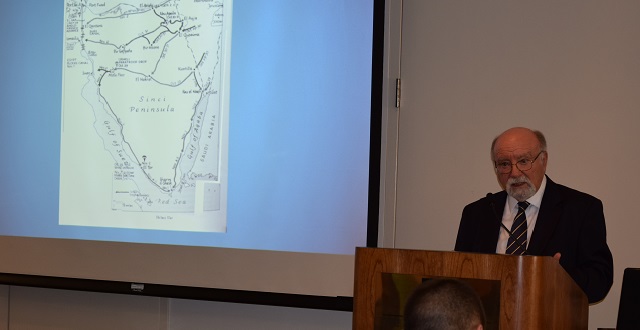
Beginning with the 1956 war and ending with the Al Aqsa Intifada of 2000, Dr. Jenab Tutunji provides a historical examination of events that looks at Israel’s justifications for war that have impeded peace in the Israel-Palestine conflict.

Najib Joe Hakim shares images he took while living in Jerusalem in 1978-79 and the summer of 1981.

Palestine Center Brief No. 327 (May 21, 2019)

Now serving as the head of the PLO mission in the United Kingdom, Dr. Husam Zomlot provides updates on the latest political and diplomatic developments, and discusses whether the Palestinian leadership still believes that a peace settlement is possible, and if so, how.

Palestine Center Brief No. 326 (April 10, 2019)

Dr. Ramzy Baroud’s delivery of the 2019 Hisham Sharabi Memorial Lecture addresses the necessity of re-articulating the Palestinian narrative, based on the aspirations of the Palestinian people. He reminds us that they are the protagonists of the Palestinian story, the victims of oppression and the main channel of resistance, starting with the creation of Israel on the ruins of Palestinian towns and villages in 1948.
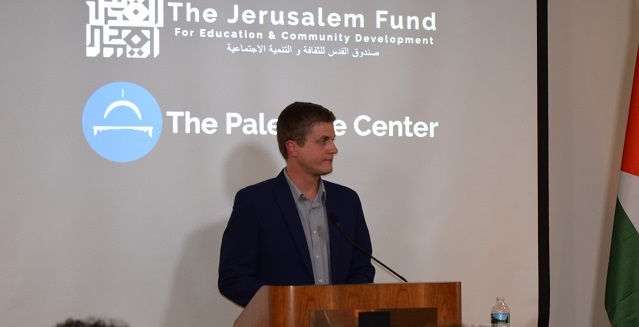
After decades of occupation and creeping annexation, Israel has created an apartheid system in historic Palestine. Yet, opposition to Israeli policies are growing within Jewish communities and among Western progressives, while the rise of populist movements around the world has confused party lines on the question and the Palestinian-led boycott campaign continues to gain momentum. White argues that is urgent to plot a course to avoid the mistakes of the past—to create a real way forward in Palestine.

Through educational events, humanitarian support, and cultural preservation, the Jerusalem Fund is helping build the movement for Palestinian liberation.
Connect
The Jerusalem Fund
2425 Virginia Ave NW
Washington, DC 20037
(202) 338-1958