
Israel plunders Palestine’s gas and oil

The Gaza Strip, West Bank and East Jerusalem (OPT), is rich in oil, gas a shale oil resources, al-Haq claims in its 2015 report, Annexing Energy. If these resources were to be developed, Palestine would be economically self-sufficient and relieved from dependence on international aid. However, as expected, Israel has a history of systematically preventing Palestine’s development of oil and gas in the OPT. Since 1967, the OPT’s natural resources have been governed by Israel’s government, allowing Israel to manage its natural resources to the benefit of Israeli citizens and corporations – not the local population.
Israeli Forces in Occupied Palestinian Territories Must End Pattern of Unlawful Killing

Israeli forces have carried out a series of unlawful killings of Palestinians using intentional lethal force without justification, said Amnesty International today, based on the findings of an ongoing research trip to the West Bank, including East Jerusalem.

Palestine and the Palestinians: Media, People, Politics

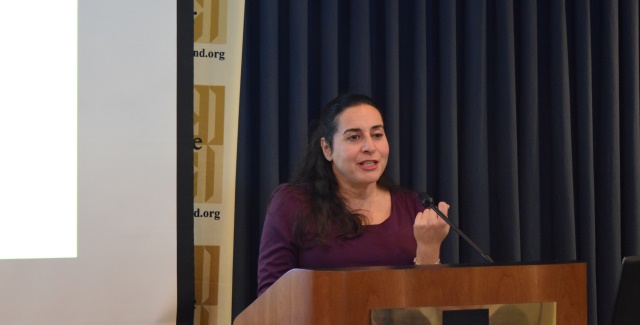
The Palestine Center’s 2015 conference examines multiple aspects of the current situation, focusing on the context and representation of Palestinians in the media, regional and international politics, and the United States. Internationally renowned scholars, activists, journalists, and practitioners analyze factors on the ground and larger policies in four panels.

Ramzi Aburedwan and The Dal`ouna Ensemble perform at Busboys and Poets

Acclaimed Palestinian musician Ramzi Aburedwan and the Dal`ouna Ensemble performed at Busboys and Poets during their July tour of the DC metro area. Bringing together musicians from the Arab world and the West, their music crosses many boundaries by promoting diverse intercultural exchange through fusion of Palestinian folk music, world and classical music, and jazz.

Illegal Settlements and Settler Violence

By Palestine Center Interns

In order to understand the legality of settlements, it is important first to appreciate the historical significance of the June War of 1967, also known as the Six Day War. After launching a military campaign against Egypt, Israel began its occupation over the Gaza Strip and the Sinai Peninsula. Then, in response to a retaliation from Syrian and Jordanian forces, Israel conquered East Jerusalem, Bethlehem, Nablus and remaining lands in the West Bank and Golan Heights – land it still occupies today.
