Palestinian Steadfastness and the Ramallah Friends School

By Palestine Center Interns

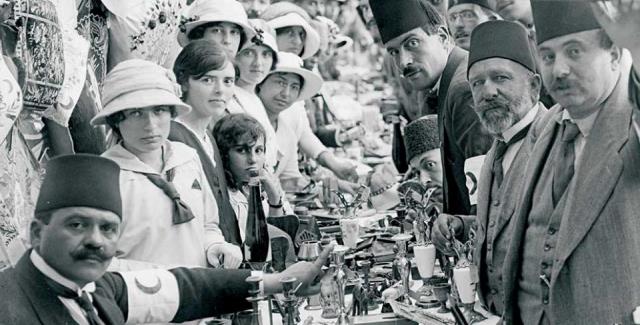
On 16 June, the Palestine Center hosted Gordon Davies, Betsy Brinson and Joyce Ajlouny to speak on the history of the Friends School in Ramallah. The school has withstood the test of time, witnessing Ottoman domination, the British Mandate, Jordanian administration, and Israeli occupation. Yet, the school’s commitment to Quaker values of nonviolence, dialogue, and equality has never wavered. Davies and Brinson spoke on the research and experiences that led to their book Sumoud: Voices and Images of the Ramallah Friends School.

Palestinian-American Comedians’ Historic Performance at the Kennedy Center

By Palestine Center

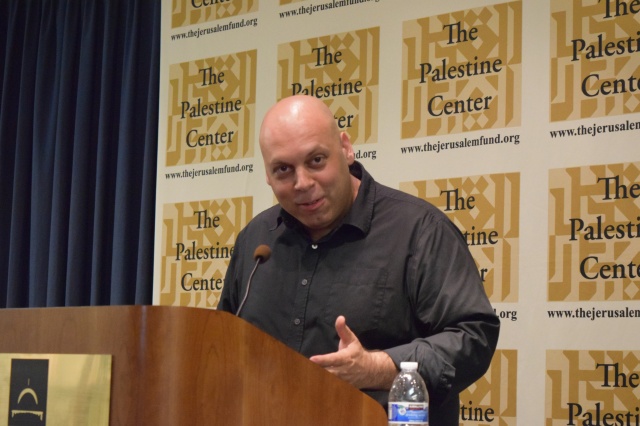
On Friday, 5 June, Amer Zahr, Mike Easmeil, Mona Aburimshan, and Said Durrah made history at the Kennedy Center. Sponsored by The Jerusalem Fund, Zahr and his fellow comedians were the first Palestinian American comedians to perform at the world-renowned performing arts center. Zahr’s routine, entitled “Being Palestinian Makes Me Smile,” quickly sold out and attracted a crowd of Arabs and non-Arabs alike. Using anecdotes from both their childhood and adult lives, Zahr and company turned the pain and struggle of the Palestinian narrative into relatable accounts of hilarity.

Achieving a Just Peace in Israel/Palestine: A debate between Peter Beinart and Yousef Munayyer

In the wake of the formation of the new Israeli government and as the Vatican formally recognizes the the state of Palestine, the debate about Israel/Palestine in the United States is shifting. As many look past a two state solution that seems increasingly difficult to achieve, more fundamental debates about Zionism, partition and equality are gaining greater prominence.

Comedy and Palestine: An Interview with Amer Zahr

By Palestine Center Interns

This Friday, 5 June, Amer Zahr will be the first Palestinian-American comedian to perform at the Kennedy Center for the Performing Arts. Zahr stopped by The Palestine Center this past Wednesday and gave a talk entitled “Comedy and Palestine.” He discussed his experiences as a Palestinian American comedian. Although it was not a comedy routine, Zahr’s talk certainly elicited quite a few laughs from the audience.

Summer Film Series: “1913: Seeds of Conflict” by and with Ben Loeterman

1913: Seeds of Conflict examines the divergent social forces growing in Palestine before the outbreak of World War I that caused the simultaneous rise in Jewish and Arab nationalism. Combining the perspectives of a wide range of Arab, Israeli and American scholars, the film includes information from documents previously unavailable from the Turkish Ottoman archives and largely untouched by historians.

Children of the Stone:The Power of Music in a Hard Land

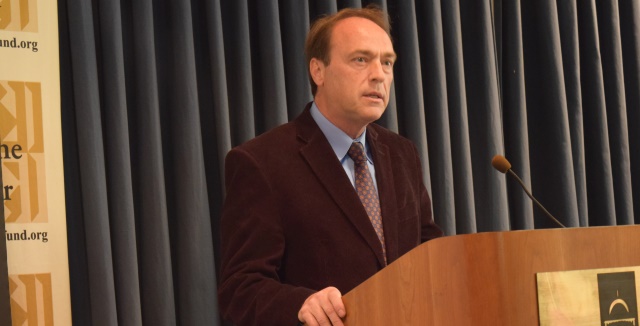
Author Sandy Tolan reads from his new book, Children of Stone, in which he documents Palestinian musician Ramz Aburedwan’s miraculous journey: from a child confronting an occupying army, to a burgeoning musician, to a music teacher and school founder sharing music with so many Palestinian children. Children of the Stone is a hopeful story of the power of music to teach peace to a generation of children across the Israeli-Palestinian divide.

The Palestinian Citizens of Israel: Domestic Politics, Representation, and Civil Rights

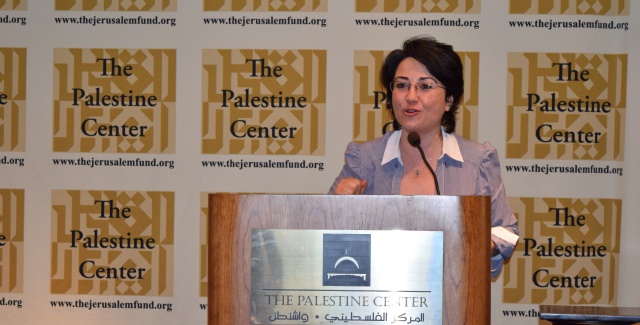
Haneen Al Zoubi, a Palestinian lawmaker and Member of the Israeli Knesset, talks about the newly empowered alliance of the Joint List and its potential in improving the human, civil, and political rights of the Palestinian citizens of Israel. She discusses the recent elections and the ramifications of the Likud party winning another term.

Illegal Settlements and Settler Violence

By Palestine Center Interns

In order to understand the legality of settlements, it is important first to appreciate the historical significance of the June War of 1967, also known as the Six Day War. After launching a military campaign against Egypt, Israel began its occupation over the Gaza Strip and the Sinai Peninsula. Then, in response to a retaliation from Syrian and Jordanian forces, Israel conquered East Jerusalem, Bethlehem, Nablus and remaining lands in the West Bank and Golan Heights – land it still occupies today.