The DNC Debates Israel and Palestine

By Zeina Azzam

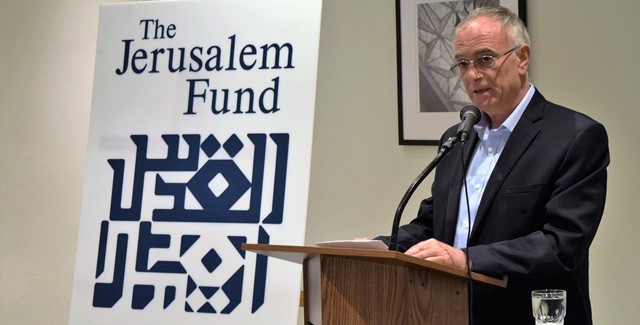
It is clear that there are changes in the way Palestine and Israel are being discussed in the media and in the progressive movement in the United States. Now that the traditional taboos of criticizing Israel have been brought to light and acknowledged nationally, our work is to continue the momentum toward increased awareness of the Palestinians’ plight.
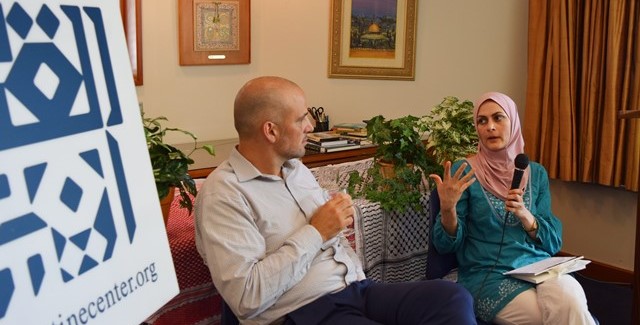
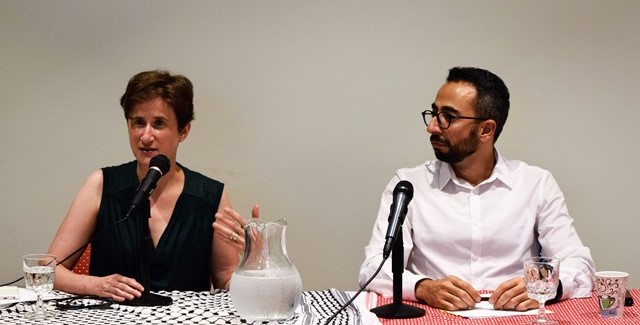
2016 Summer Intern Panel: “Overcoming Restrictions: Resistance through Publication & Expression”

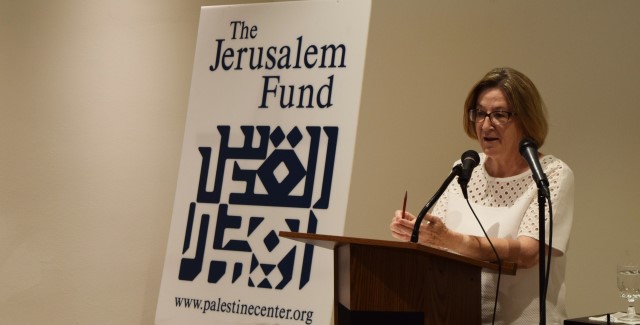
In the concluding panel of the 2016 Summer Intern Lecture Series, Dr. William Youmans and Ms. Laila El-Haddad examine the less concrete but equally powerful restraints on the mobility of ideas in the Palestinian context. These include Israel’s suppression of political and literary expression, manipulation of the news, media blackouts, and outright censorship. As writers and social media experts, these panelists offer their experiences in the use of written and electronic media as powerful tools in the spread of ideas and resistance to Israel’s polities.

2016 Summer Intern Panel: “Restrictions on Mobility: Structural Mechanisms & Physical Barriers”

This panel with Dr. Shira Robinson and Mr. Minem Maroof examines the policies behind the restrictions on Palestinian movement, both physical and legal, and how these mechanisms limit Palestinian freedom of movement and allow Israel to maintain a matrix of control over the Palestinian population.

Cultural and Educational Development: A Pathway to Resilience and Hope

Ziad Khalaf, Director General of the A.M. Qattan Foundation, sheds light on the Foundation’s experience in Palestine and elsewhere, as it has become one of the major organizations developing programs for culture and the arts, education, and childhood in Palestine. Among other things, Khalaf discuses the Foundation’s fourth core program, the Public Program, and the Science Studio project, a multi-year pilot project which will form the nucleus for launching an interactive science center in Palestine that aims at developing science education at the national level.

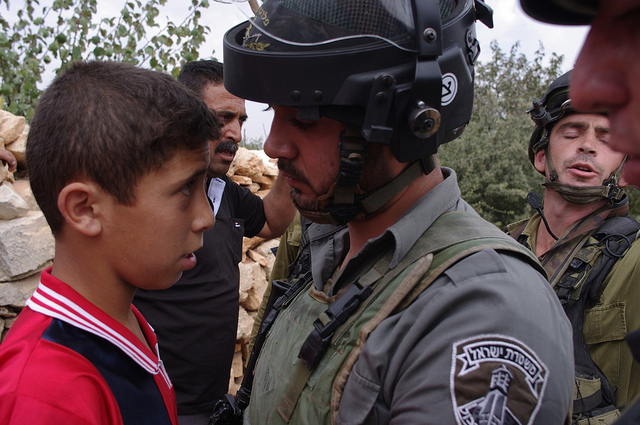
The Plight of Child Prisoners: Israel’s Glaring Human Rights Violations

By Palestine Center Interns — Sarah Dickshinski and Mirvat Salameh 

In February 2016 there were 438 Palestinian minors being held in Israeli prisons and since this time the number of Palestinian child detainees in Israel has barely decreased. Victims of abuse and subject to harsh Israeli military laws that deprive them of their basic rights, Palestinian children find themselves part of larger system of inequality and oppression imposed by Israel in Palestine. Although Israel has been called out time and time again for violating international conventions protecting minors, its military forces continue to wage war against a defenseless portion of the Palestinian population.


2016 Summer Intern Lecture: “Conceptions of Mobility”

Dr. Julie Peteet explores mobility as an intended consequence of military occupation in a keynote lecture that opens the 2016 Summer Intern Lecture Series, “Mobility: Israel’s Structural Restrictions and Palestine’s Resistance” on July 11, 2016. She argues that Israeli policies of closure and separation through physical structures and bureaucratic requirements constrain Palestinians’ mobility. Dr. Peteet’s presentation draws from her research, fieldwork in the West Bank, and expertise in space and mobility, Palestinian culture, and resistance. 

What is the Value of Palestinian Cinema?

By Samirah Alkassim

When we consider what is most commonly encountered as Palestinian cinema, it is useful to borrow an analogy from linguistics. Double marking is when grammatical marks are placed at the heads of words, modifiers, and phrases as well as on their endings to indicate things like gender, case, and other distinctions. It occurs in both Modern Standard Arabic and Classical Arabic, as well as in other languages. Likewise, Palestinian cinema is doubly marked.

Forbidden Colors: Artists and Censorship

Artists from the United States and abroad create work in all media exploring the concept of artists’ responses to various forms of censorship or political pressure specific to artistic production. The show takes its name from a 1980 Israeli law forbidding artwork of “political significance,” which banned art composed of the four colors of the Palestinian flag: red, green, white, and black.  Palestinians were arrested for creating or displaying such artwork.  The ban was lifted after the signing of the Oslo Accords in 1993.

Khirbet Tana: The Process of Destroying Palestine

By Lucian Dieterman

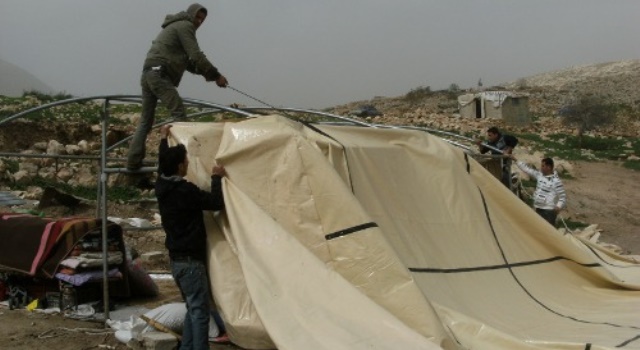
The troubling aspect of this account is not the inconvenience it takes to search for a village that very clearly exists, but rather the fact that the “invisibility” of Khirbet Tana represents a microcosm of the much broader Israeli agenda of home demolitions in an attempt to further depopulate and destroy evidence of Palestine and Palestinians.