How BDS Is Educating the Public About Israel’s Brutal Policies
By Yousef Munayyer
Instead of offering suggestions for changing the prevailing power dynamic, Chomsky warns against the one strategy that offers the most hope.

By Yousef Munayyer
Instead of offering suggestions for changing the prevailing power dynamic, Chomsky warns against the one strategy that offers the most hope.
Yousef Munayyer
The BDS movement began as a call by Palestinian civil society organizations in 2005. The reason this call was made is because Palestinian civil society witnessed the systematic failure of states and the state system to redress their legitimate grievances against Israel for violations of international law and human rights abuses.
Yousef Munayyer: In a historic decision this week, the American Studies Association voted to boycott Israeli academic institutions, endorsing Palestinian civil society’s call for boycotts, divestments and sanctions against Israel until it complies with international law and ends abuses against Palestinian human rights.

Mr. Antony Loewenstein and Mr. Ahmed Moor discuss the possibilities for a one-state solution to the Palestinian/Israeli conflict.

Phyllis Bennis and Adam Gallagher discuss the ability of grassroots movements to achieve political aims without party politics and their response to political shortcomings. This was the first in our annual Palestine Center Interns Summer Lecture Series entitled, “Reevaluating Palestinian Stakeholder Legitimacy.”
Yousef Munayyer: Last week the Israeli prime minister, with the help of Washington, made one of the strongest cases for the need for Boycott, Divestment and Sanctions (BDS) in the wake of an Israeli court decision regarding an illegal Israeli settlement in the occupied West Bank. By demonstrating that twenty years of ‘peace process’ policies have yielded an Israeli government drunk on settlements, Netanyahu’s statement and the United States’ reaction should convince any remaining doubters that BDS is an urgently necessary alternative.
Yousef Munayyer: In recent reactions to the BDS movement, writers like Peter Beinart, Daniel Levy and Thomas Friedman have offered criticism. This criticism, however, which views the question of Palestine through the prism of Zionism, is incapable of grappling with a movement that views the same question through a humanist perspective of rights.
Yousef Munayyer: Peter Beinart’s New York Times op-ed, “To Save Israel, Boycott the Settlements is an example of the increased volume voices described as Liberal Zionists have garnered in the discourse on Israel & Palestine. But liberal Zionism is a contradiction is terms.
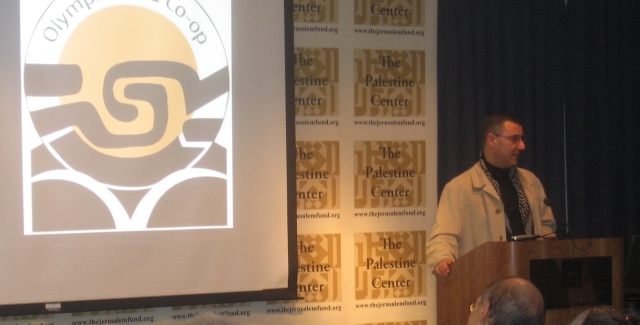
Omar Barghouti, an independent Palestinian researcher, commentator and human rights activist committed to upholding international law and universal human rights, presents the BDS movement and its legacy.

Through educational events, humanitarian support, and cultural preservation, the Jerusalem Fund is helping build the movement for Palestinian liberation.
Connect
The Jerusalem Fund
2425 Virginia Ave NW
Washington, DC 20037
(202) 338-1958