BDS: Context and Challenges
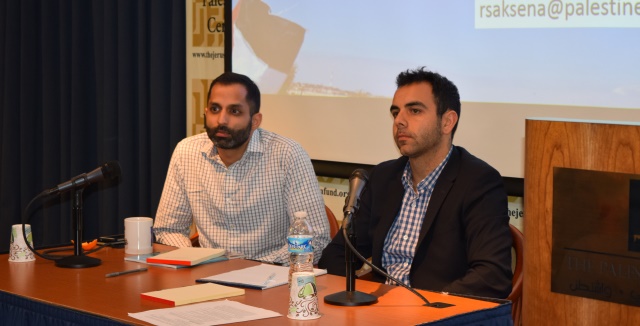
This panel seeks to examine the current context of and challenges faced by the BDS movement with analysis provided by Omar Shakir from the Center for Constitutional Rights and Rahul Saksena from Palestine Legal.
Today the University of California (UC) Board of Regents adopted a Report and Statement of Principles against Intolerance that states: “Anti-Semitism, anti-Semitic forms of anti-Zionism, and other forms of discrimination have no place at the University of California.” In doing so, the Regents rejected a blanket conflation of anti-Semitism with anti-Zionism.
Haaretz columnist Gideon Levy talks to journalist Max Blumenthal about how the Israeli occupation has poisoned not only the region but much of the world, and how BDS might be the last standing hope to dismantle it.
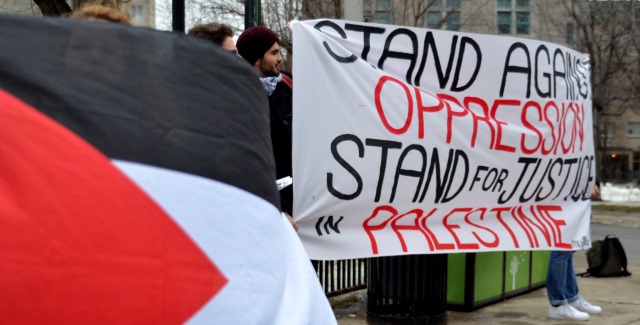
Students from a wide coalition at the University of Minnesota recently launched a divestment campaign to urge the administration to pull its investments in four companies that profit from Israel’s violations of Palestinian rights. Meanwhile, funds for student activities at Vassar College were threatened by the college’s board of trustees if a boycott amendment was passed. And in New York City, a major Zionist group is pushing local lawmakers to ban chapters of Students for Justice in Palestine.
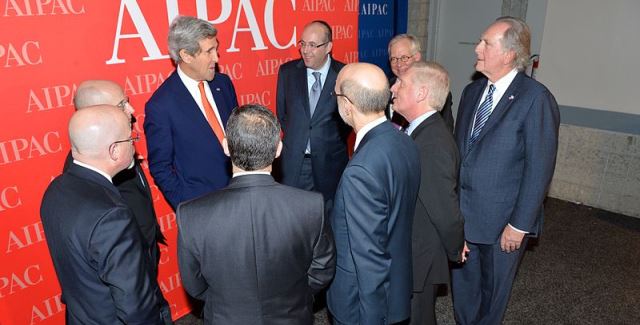
When the American Israel Public Affairs Committee (AIPAC) comes to town this week for their annual policy conference, high on the agenda of issues they’ll be pushing Congress to support are bills designed to ‘fight the boycott of Israel.’ This campaign to combat efforts to ‘boycott, divest, or sanction’ Israel (BDS) has become a full-fledged national movement with AIPAC-supported initiatives moving forward not only in Congress but in two dozen state legislatures, as well. These bills, both federal and state, are all variations on a theme designed to punish, by blacklisting or sanctions, any governments, businesses, organizations, or individuals who boycott, divest funds, or impose sanctions on Israel or Israelis or products emanating from Israel or ‘Israeli controlled territories.’

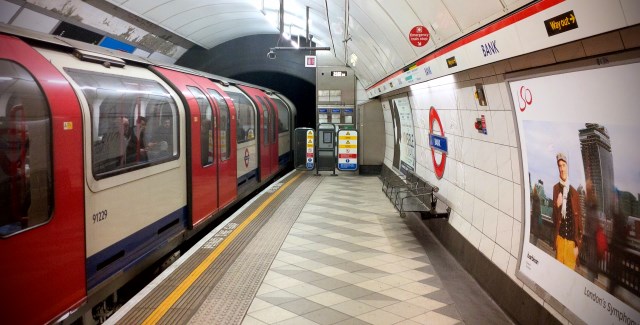
Activists from London Palestine Action put up these posters criticizing Israel’s apartheid policies against Palestinians all over London’s underground train network early Sunday morning. An activist from the group, who did not want to be named, told The Electronic Intifada that they posted 150 copies around at least four different lines on the network. The activist provided these photos.These posters are “subvertisements,” political messages designed to look like sanctioned advertising. They were fitted on top of paid ads, the activist said.
American musicians who support boycotting Israel over the issue of Palestinian rights are terrified to speak out for fear their careers will be destroyed, according to Roger Waters. The Pink Floyd star – a prominent supporter of the boycott, divestment and sanctions (BDS) campaign against Israel since its inception 10 years ago – said the experience of seeing himself constantly labelled a Nazi and anti-Semite had scared people into silence.
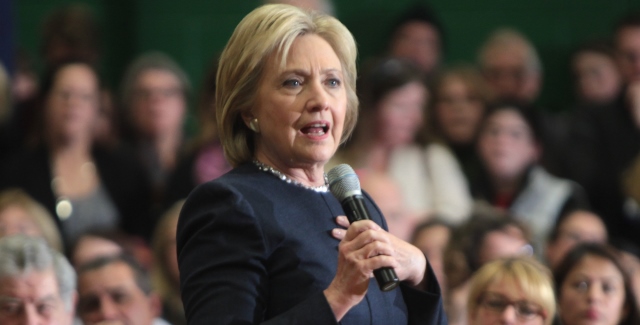
Former President Bill Clinton on Monday met in secret (no press allowed) with roughly 100 leaders of South Florida’s Jewish community, and, as the Times of Israel reports, “He vowed that, if elected, Hillary Clinton would make it one of her top priorities to strengthen the U.S.-Israel alliance.” He also “stressed the close bond that he and his wife have with the State of Israel.”
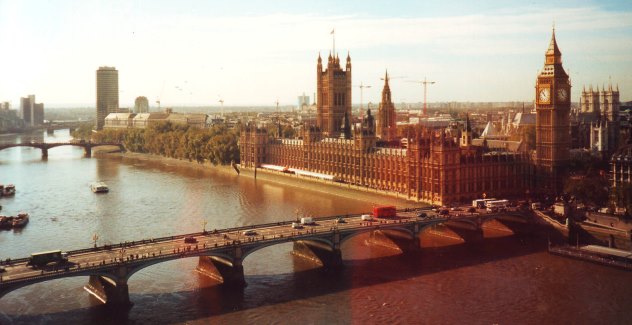
The U.K. Government today announced that it is now illegal for “local [city] councils, public bodies, and even some university student unions … to refuse to buy goods and services from companies involved in the arms trade, fossil fuels, tobacco products, or Israeli settlements in the occupied West Bank.” Thus, any entities that support or participate in the global boycott of Israeli settlements will face “severe penalties” under the criminal law.