Permission To Narrate

– The Jerusalem Fund Blog

Gallery Al-Quds

Summer Film Series: “Io sto con la sposa (On the Bride’s Side)” by Antionio Augugliaro, Gabriele Del Grande, and Khaled Soliman Al Nassiry
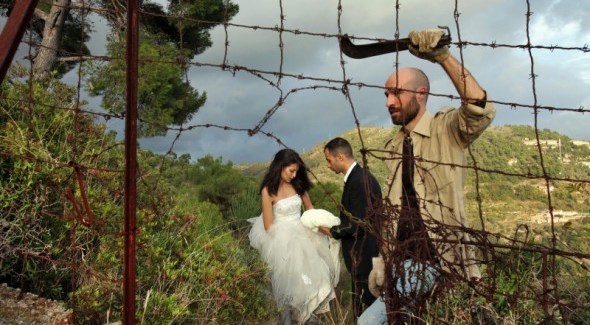
On the Bride’s Side records the 2013 journey of five undocumented Syrian and Palestinian refugees who end up in Italy fleeing the war in Syria, and with the help of the filmmakers, continue on from Milan to Stockholm where they seek to attain political asylum. The refugees and their supporters travel as a fake wedding party complete with a bride in a white gown, hoping to avoid detection and arrest.

The Eye of the Blossom

“Growing up in a garden of flowers … literally, as a child I was fascinated, taken by its diversity in shape and color, and feasted my eyes and never ignored…. As a photographer I always carried my camera with me and always on the lookout for flowers.  No matter what assignments I had I always noticed the flower everywhere. 

Classical Calligraphy by Nawaf Soliman

Calligraphy is more than beautiful Arabic handwriting. It is the imaginative expression of individual creativity, the area of aesthetics where skill meets genius. Primarily a means for worshipping the Creator, the Arabic language is organically linked to the Qur’an. Thus both words and the forms of words take on power greater than their individual entities. It is from this that ornamental calligraphy stems.

Curator’s Comments: Vantablack and Artistic Freedom

By Dagmar Painter

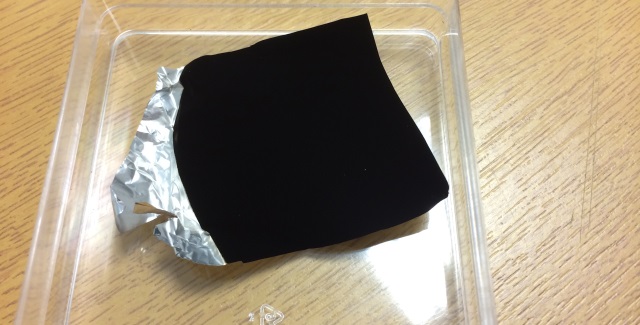
In the sometimes rarified world of art and artists, there has recently emerged a controversy that I think serves to illustrate a greater truth, that of artistic freedom and the power of the artist to illuminate injustice and spur social change. World-famous artist Sir Anish Kapoor has acquired the exclusive rights to a type of carbon-based pigment called Vantablack, “the blackest shade of black ever made,” according to numerous articles published in Smithsonian Magazine, the Daily Mail, Artnet News, The Huffington Post, etc.

Palestine Profiles: Poet Fadwa Tuqan

By Zeina Azzam

Palestinian poet Fadwa Tuqan (1917-2003) was born to a prominent family in the West Bank city of Nablus during the year of the Balfour Declaration, which presaged the eventual dispossession of the Palestinian people of their homeland. Her poetry reflected the pain, loss, and anger of the Nakba, the experience of fleeing war and living as a refugee, and the courageous aspirations of the Palestinians to nationhood and return to their homeland.