Permission To Narrate

– Edward Said

The late Palestinian scholar, Edward Said, remarked that Palestinians had been denied permission to narrate their history and speak of the day-to-day experiences of life in the margins. Here, we reclaim that permission to narrate our own stories.

Israel Extracts “Confession” From Badly Wounded Cousin of Ahed Tamimi, Jailed Protest Icon

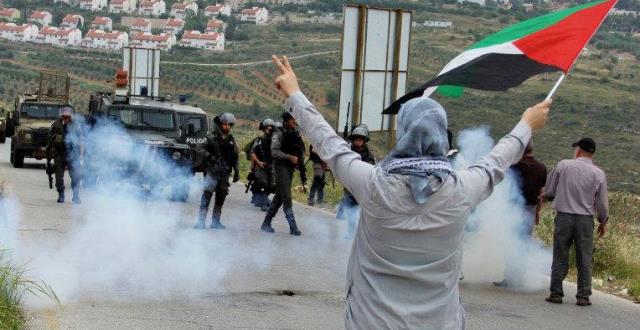
Israeli forces detained a teenage Palestinian boy who has been missing part of his skull since December, when he was shot in the head by an Israeli soldier during a protest against the occupation of his West Bank village. The boy, Mohammed Tamimi, 15, was one of 10 Palestinian residents of the village of Nabi Saleh arrested in a pre-dawn raid’

Jerusalem’s Holy Sepulchre shut in protest against Israeli policy

In a rare move, the Church of the Holy Sepulchre in Jerusalem has been indefinitely shut in protest against what church leaders say is “discriminatory” Israeli policy aimed at weakening Christian presence in the holy city. In a statement released on Sunday, church leaders said Israel was violating the status quo at the site, which is one of the holiest in Christianity, at an ‘unprecedented level’

Genocide? As Gaza Dries Out, Israel Turns Off Fresh Water Spigot

This kind of mistreatment is part and parcel of an overall package of deprivation that continues to plague the Palestinian people. There are some 2 million residents in Gaza affected by this egregious policy, famously one of the most densely populated areas on the planet. Gaza’s water resources are fully controlled by Israel and the division of groundwater is something that was provided for in the Oslo II Accord. However, despite the fact that under the Accord Israel is allocated four times the Palestinian portion of water resources, it has been revealed that Israel has been extracting 80 percent more water from the West Bank than it agreed to

Palestinian Schoolteacher Mauled by Israeli Military Dog as Soldiers Watch

Bursting into a schoolteacher’s house in the middle of the night, soldiers sicced their dog on him. The dog bit him and held on, as his family looked on, horrified.It’s not an easy sight to look at. His wife shows us the photographs on her phone: his wounded arm, battered and bleeding, mauled and mangled, scarred along its entire length. The same with his hip.

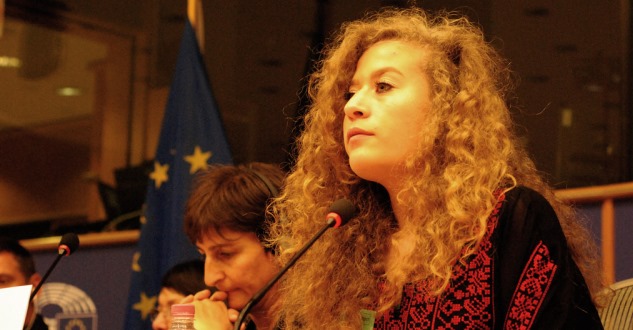
I’m Ahed Tamimi’s cousin. Israel needs to stop imprisoning kids like her.

I had barely fallen asleep when I woke to find an armed Israeli soldier hovering over my bed. He told me to get up quickly and put on a jacket. Half asleep, I was handcuffed, thrown into an army jeep, and taken to be interrogated. They had already taken my 16-year-old cousin, Ahed, the night before, and now it was my turn.

Structural Injustice: How Trials of Palestinians in Israeli Military Courts Lead to Misperception

by Palestine Center Interns

Despite the fact that most Palestinians who are convicted have committed no crime and engaged in no violence, the military court system creates a notion that legal due process is happening in Palestine. While this is the opposite of the truth, it still affects global perceptions of Palestine and Palestinians. This can be seen especially in the United States, where major media organizations might play up the alleged charges against a Palestinian while neglecting to mention the circumstances of their situation. This essay will attempt to demonstrate the injustice of these structures and systems of the Israeli military court and prison system, which has negatively impacted the lives of Palestinians and created false perceptions of their lives, character, and actions.

Women and girls bear brunt of Israel’s crimes in Jordan Valley

This short documentary by the Palestinian human rights group Al-Haq focuses on the life of a family in al-Hadidiya, a Bedouin community in the northern Jordan Valley. Titled Sumoud – Arabic for steadfastness – it is named after the youngest daughter of the Bisharat family, which has resided in the same occupied West Bank community for generations.