“Gaza Girls: Growing Up in the Gaza Strip”

Photographer and journalist Monique Jaques presents her award-winning photo book,Gaza Girls: Growing Up in the Gaza Strip, which looks at moments of laughter, dreaming, and living for young girls in Gaza, despite the difficulty and constraints that define their reality. This project was first published in The New York Times and has been syndicated inMarie Claire ItalyVogue ItalyPanorama ItalyThe Telegraph and The Guardian UK. Jaques discusses how she produced this book and the lessons learned along the way.

Summer Film Series 2018 – “Killing Gaza”

In this film, independent journalists Max Blumenthal and Dan Cohen capture the assault on Gaza during the 2014 war and chronicle its horrific aftermath. Besides documenting Palestinian resilience and suffering, Killing Gaza also documents the war crimes committed by the Israeli military through direct testimony and evidence from the survivors, delivered often just days after escaping indiscriminate shelling, bombings and summary executions.

Summer Film Series 2018 – “The Truth: Lost at Sea”

Rifat Audeh, one of the survivors aboard the Mavi Marmara, combines footage shot aboard the Freedom Flotilla with subsequent media coverage, to show how the dead activists and their comrades who defended their vessels were portrayed. The film reveals what really happened and how it was spun in traditional and online media outlets.

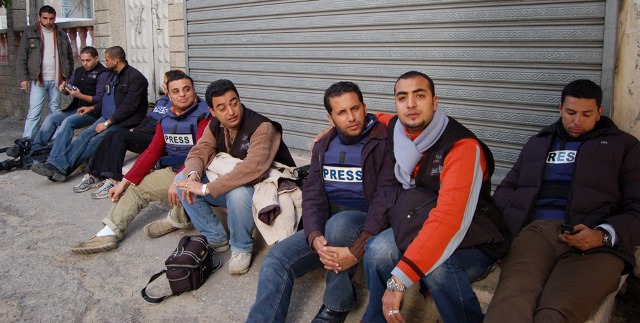
He was wearing a vest marked ‘PRESS.’ He was shot dead covering a protest in Gaza.

Yaser Murtaja had often filmed from the sky, but he never lived to fulfill his dream of flying on an airplane through the clouds.  The young journalist shot drone images and video for Ain Media, a small Gaza-based news agency he started five years ago. Just two weeks ago, he posted an aerial photo of Gaza City’s port on Facebook. “I wish that the day would come to take this shot when I’m in the air and not on the ground,”

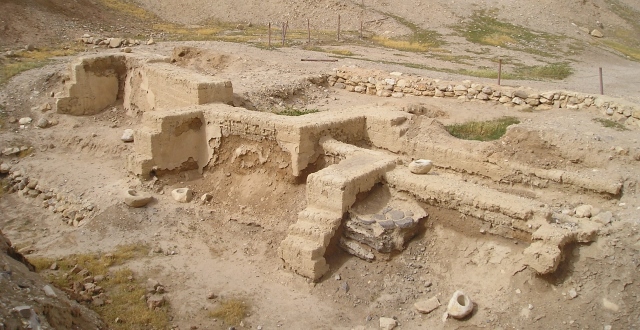
Gazan family discovers Roman site in backyard

On the cold, rainy night of Jan. 25, the Kafarina family unearthed an archaeological site that sparked a major controversy between the family and the authorities that remains unresolved. The family of 20, including 14 children, live in the town of Beit Hanoun in the northern Gaza Strip, a few kilometers from the border separating Gaza and Israel. One of the grandchildren, Abdelkarem al-Kafarina, noticed as the rain kept falling that a small cavity appeared in their backyard.

“Prisoners of History: The Story of Dalia, A Palestinian”

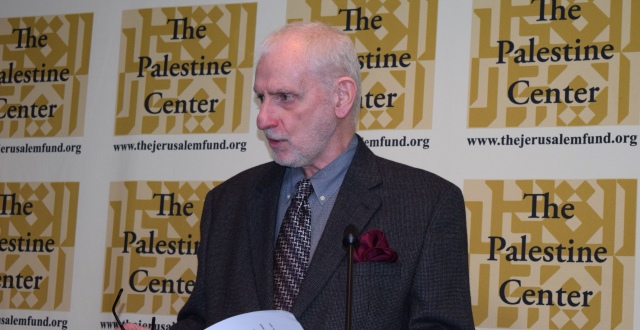
Author Charles Sutherland discusses the issues shaping his new book, “Prisoners of History: Dalia, a Palestinian”, which is a non-fiction novel of contemporary events. It is about a girl, one of over 1,000,000 Palestinian children trapped as prisoners in the military Occupied Territories of Gaza and the West Bank, and her struggle for food, electricity, education… and freedom. The short fact-based narrative is based on official Israeli policies, secret police tactics, real-life events, and authentic episodes experienced by actual people.

Genocide? As Gaza Dries Out, Israel Turns Off Fresh Water Spigot

This kind of mistreatment is part and parcel of an overall package of deprivation that continues to plague the Palestinian people. There are some 2 million residents in Gaza affected by this egregious policy, famously one of the most densely populated areas on the planet. Gaza’s water resources are fully controlled by Israel and the division of groundwater is something that was provided for in the Oslo II Accord. However, despite the fact that under the Accord Israel is allocated four times the Palestinian portion of water resources, it has been revealed that Israel has been extracting 80 percent more water from the West Bank than it agreed to

Life in the Gaza Strip — a cauldron of deficit, despair and desperation

Deficit and desperation define life these days in the Gaza Strip. Residents make do with four hours of electricity a day. Most people don’t have access to clean water because the supply system is contaminated with sewage. Breakfast for some schoolchildren is a cup of hot water flavored with a dash of salt.”Despair isn’t even the right word to describe what’s going on here because things are getting worse and worse,” said Omar Ghraieb, 31, a journalist and digital media manager living in Gaza. “We wake up to a world of struggles each day.”