Washington and the Peace Process: Assessing America’s Role, Past and Present
Professor Rashid Khalidi explores important questions around the role the United States is playing in the Israeli-Palestinian peace process both past and present.
It is said that naturalized United States citizens often have a greater appreciation of their adopted country than those born on American soil. As a naturalized U.S. citizen who has traveled extensively, particularly across borders where the very notion of citizenship can be a contentious political idea, I have a deep appreciation for my navy blue passport.
Writer and political analyst Josh Ruebner charts Obama’s journey from optimism to frustration in the first hard-hitting investigation into why the president failed to make any progress on this critical issue, and how his unwillingness to challenge the Israel lobby has shattered hopes for peace.
Yousef Munayyer: Something about the third week of April brings tragedy and bloodshed into American history: Waco, Oklahoma City, Columbine, Virginia Tech. Now Boston and West, Texas, are added to the list. The United States has too many memorials to remember in this short span. But the 2013 version of this week will prove important to reflect upon. Between the news of Boston and Texas came news out of Washington: the Senate failed to pass legislation that would expand background checks for gun sales, which would have been the simplest, least controversial legislative action they could have taken in response to an ongoing national debate set off after the Newtown, CT, shootings.

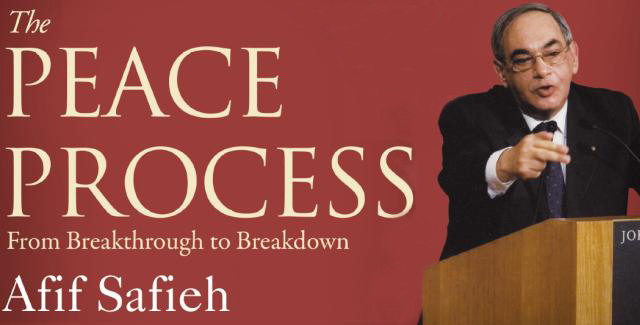
Amb. Safieh was remarkably accurate a decade ago observing Washington from across the pond.