The Inside Story on Our UN Report Calling Israel an Apartheid State

A people cannot be permanently repressed in all these ways without viewing the structure that has emerged as an apartheid regime.

A people cannot be permanently repressed in all these ways without viewing the structure that has emerged as an apartheid regime.

By Palestine Center Interns
Non-violent demonstrations by pro-Palestinian groups, such as chanting or protesting, are held as an act of solidarity for the Palestinians in crisis. In response, pro-Zionist organizations have begun to counter with claims that such pro-Palestinian demonstrations are anti-Semitic. This has produced a new dialogue that being pro-Palestinian is inherently anti-Semitic and in some cases resulting in lawsuits. The manipulated narrative of anti-Semitism is being employed by pro-Zionist groups as a smear tactic against pro-Palestinian groups in attempt to delegitimize the movement.

The Palestinian Museum has announced its rich and diverse programme for 2017 and 2018. The programme includes five major exhibitions, as well as the launch of its online platform, and the start of its digital archive, and numerous educational programmes, research projects and conferenc
By Mohamed Mohamed
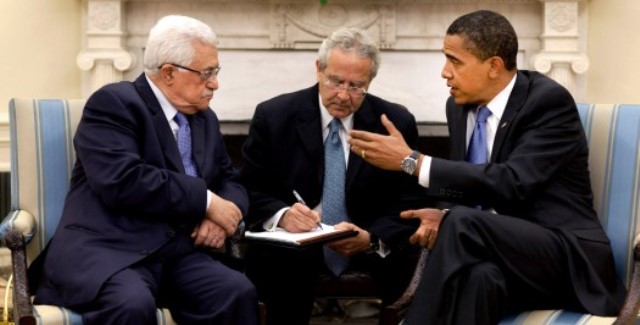
If Obama is genuinely interested in achieving a peaceful settlement to the conflict, upholding U.S. interests, and leaving behind a legacy consistent with his word, he should immediately recognize the state of Palestine.
By Jada Bullen and Marie Helmy
In the photographs, Bil’in residents stand on the threshold of the open doorway to their home–just as they would have done if Israeli soldiers were to knock on their door in the middle of the night. Yet, the images convey a distinct message – absent of fear and subjugation. Instead, the photographs depict families, fathers, mothers, sons, and daughters repossessing the dignity and humanity that soldiers come to steal away in the night.
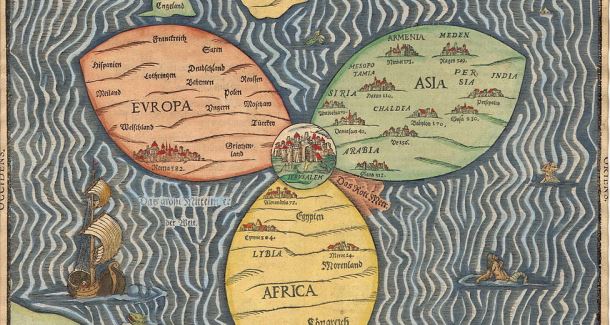
“Jerusalem, 1000-1400: Every People Under Heaven,” at the Metropolitan Museum, is a captivating show of some two hundred objects from the era of the Crusades. There are manuscripts, maps, paintings, sculptures, architectural fragments, reliquaries, ceramics, glass, fabrics, astrolabes, jewelry, weapons, and, especially, books—in nine alphabets and twelve languages. The works, from sixty lenders in more than a dozen countries, express the Jewish, Islamic, and Christian cultures of the time, the three great Abrahamic faiths sharing a city holy to them all, when they weren’t bloodily contesting it.

The third edition of Qalandiya International (QI), a biennial-style initiative, is due to launch next month across towns and villages in Palestine (5-31 October). The project, based on the themes of return and refuge, includes a new version of the Tent Embassy work by the Aboriginal artist Richard Bell, which will go on show at the Shuafat refugee camp in East Jerusalem.

by Lucian Dieterman
It is true that thousands of Palestinians make the trek from all over Palestine to pass through Qalandiya in route to Jerusalem and beyond, but this is not an average commute or even a commute of our own [American] understanding at all. The Times’ coverage of Qalandiya attempts to normalize military checkpoints, explaining them as furthering the “symbiotic economic relationship that is important to both sides,” as opposed to shedding light on the extreme burden and degradation that Palestinians encounter while crossing a checkpoint.
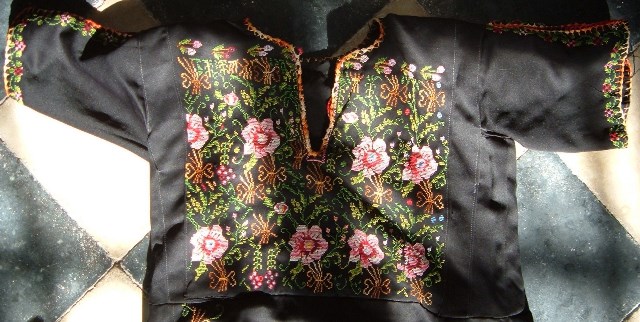
During the First Intifada, when Israeli soldiers confiscated the flags of Palestinian women protesting in the streets, the women responded by embroidering the Palestinian flag and silhouettes of the country in endless repetition along the chests, sleeves, and back hems of their thobes (traditional Palestinian dresses). Samples of these politically charged ‘Intifada Dresses’ are on display through July 30 in Beirut, Lebanon as part of an ambitious survey featuring more than 60 embroidered items, as well as photographs, paintings, and graphic arts representing Palestinian textiles throughout history.

Through educational events, humanitarian support, and cultural preservation, the Jerusalem Fund is helping build the movement for Palestinian liberation.
Connect
The Jerusalem Fund
2425 Virginia Ave NW
Washington, DC 20037
(202) 338-1958