
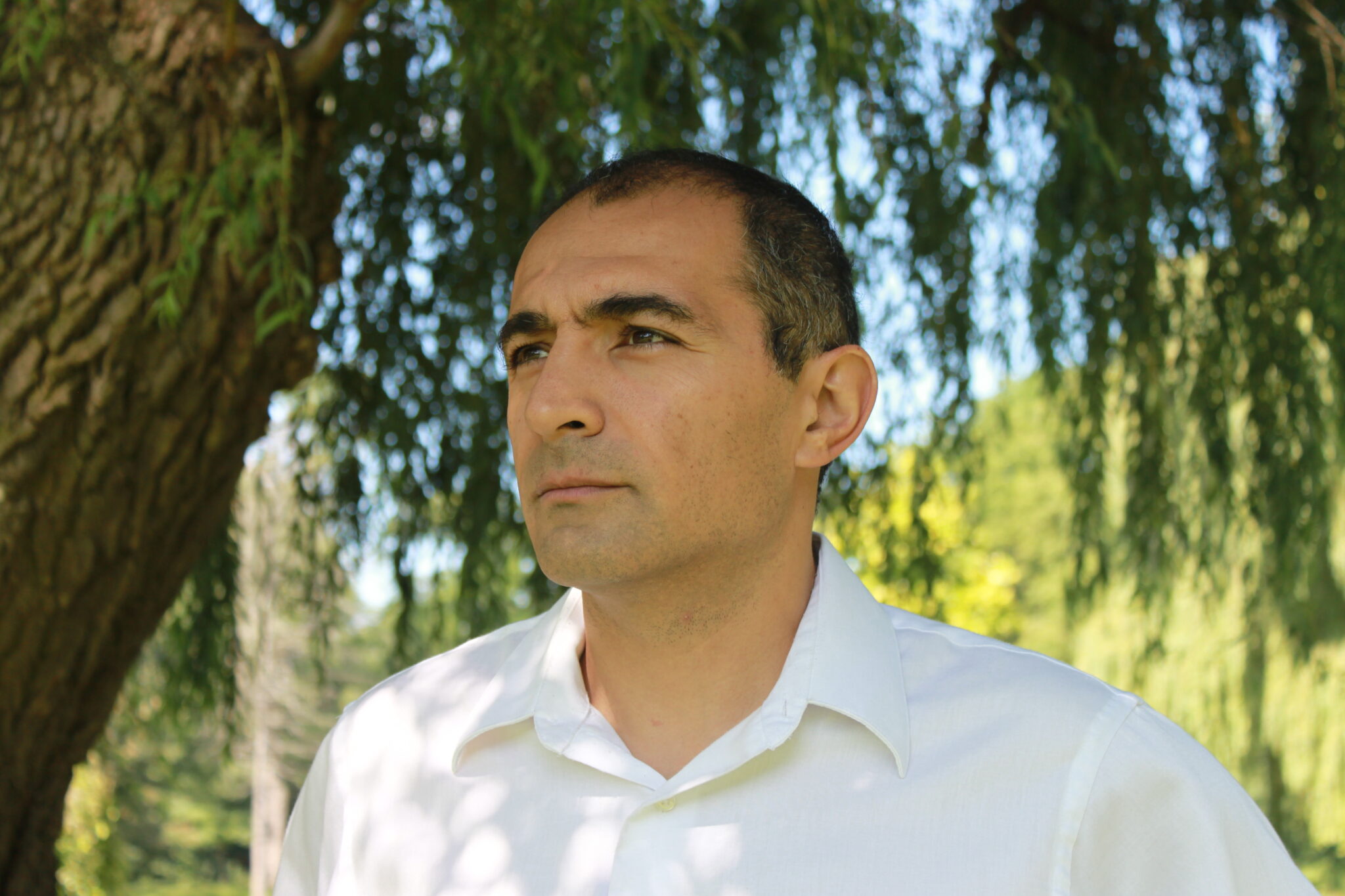
The following transcription of interview with Dr. Nader Hashemi discusses Iran’s relationship with Palestine, the Arab world’s role in the Palestinian struggle, and broader geopolitical dynamics in the Middle East and Global South.
P: Hello everyone, I’d like to welcome Dr. Nader Hashemi. Dr. Hashemi is the director of the Al-Walid Center for Muslim Christian Understanding and an associate professor of Middle Eastern and Islamic politics at the Edmund A. Walsh School of Foreign Service at Georgetown University. His intellectual and research interests lie at the intersection of comparative politics and political theory, in particular debates on the global rise of authoritarianism, religion and democracy, secularism and its discontents, Middle East and Islamic politics, democratic and human rights struggles in non-Western societies, and Islam-West relations. Dr. Hashimi is also the author of Secretarianization, mapping the new politics of the Middle East.
P: Dr. Hashemi, my questions for you today mainly focus on Iran’s relationship with Palestine and later the Arab world’s inaction when it comes to Palestinian suffering. So, has Iran’s relationships with proxy groups like Hamas and Hezbollah benefited or hurt the Palestinian people?
Dr. Nader Hashemi: You have to ask the Palestinian people.
P: That’s true.
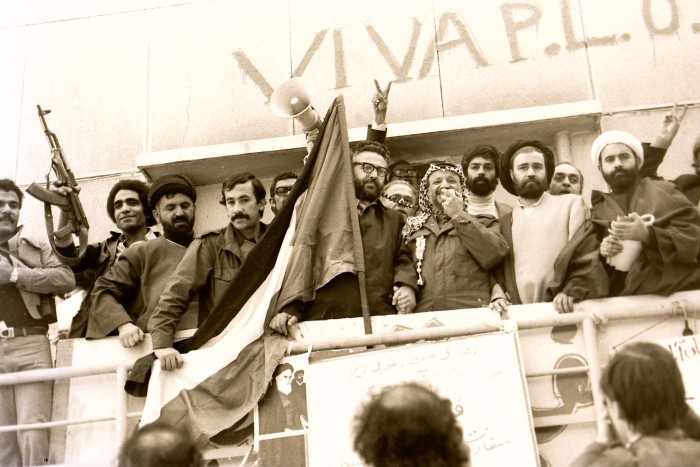
Dr. Nader Hashemi: For their assessment. My sense is that in the early days of post-revolutionary Iran, there was huge support among Palestinian nationalist groups for the revolution. for the impact that that revolution would have on the question of Palestine. I don’t know if you know this, but one of the very first heads of state or political leaders that went to Iran immediately after the revolution was Yasser Arafat. He was given the keys to the Israeli embassy and then he turned it into a Palestine embassy and then he met with Khomeini and all the senior leaders. But, you know, things changed over the course of the subsequent decades.
And when we get to this question of the axis of resistance and their support for Palestine, I think there is probably some debate among Palestinians in terms of what extent there has been support. One camp, I think, broadly is sympathetic to the support and especially to the figure of the late Hassan Nasrallah. Hassan Nasrallah was one of the most charismatic leaders in the Arab world. His political philosophy comes right out of the Islamic Republic’s worldview. He was an ally, a close confidant of the senior Iranian leadership. And he frequently spoke on the question of Palestine and was responsible. His claim to fame was expelling Israeli troops from Lebanon and engaging in various battles with Israelis. So I think on that front, there was generally a lot of sympathy and support for that particular organization in the Middle East and its connection to the question of Palestine. And I think that’s really across the board. Whether you’re a Palestinian Islamist or a secularist, I think the respect that Nasrallah had was pretty much universal among Palestinian nationalist organizations. In terms of the other militias, the Houthis, the Iraqi groups, I think less so. Because those organizations, particularly the Iraqi groups and the Houthis or the Ansar Allah, they have more of a sectarian character to them. And most Palestinians are Sunnis. I think there’s less of an appeal, less of a resonance that those groups have on the question of Palestine by virtue of their highly sectarian identity in a moment in Middle East politics where sectarian politics have been a key feature of the politics of the Middle East. It’s diminished now, but during the post-Arab Spring period it was a dominant theme. But again, at the end of the day, you’d have to ask Palestinians.
Dr. Nader Hashemi: I mean, the related question that’s fascinating to ask is, you know, to what extent has the Iranian revolution and the Islamic Republic of Iran been a source of support to Palestinians? And I think my answer is increasingly that the answer to that question is there has been less of an argument that one could advance that Iran’s foreign policy has benefited the Palestinian nationalist cause. Largely because the rhetoric of Iran’s leaders is out of step with international law, tends to be sometimes very loose and very sort of aggressive, which allows the Israeli government and its supporters to turn the narrative coming out of Iran into the question of anti-Semitism, the question of violence that mobilizes public opinion in the West. And you can just juxtapose the Islamic Republic of Iran and South Africa, for example. Both countries in the global south, which of those two countries and governments have been more supportive of Palestinian national rights on a global scale? Look what South Africa did after the genocide in Gaza. They took Israel to court. They were very successful. They had a very principled policy. They grounded it in international human rights law. They got a provisional ruling from the world court that Israel was likely committing genocide. The Islamic Republic of Iran did nothing like that, right? All they did was engage in this highly sensationalized rhetoric that I think only alienated global public opinion, but I think even within the Arab and Islamic world over the course of the decades of alienated opinion within the Middle East and the Islamic world because of the perception of the Islamic Republic, especially after the Arab Spring and because of what Iran did in Syria, that Iran is just a sectarian regional power interested in supporting its own sect and not really interested in anything else. So that’s how I would answer the question.
P: Great. So you mentioned Yasser Arafat, and I kind of want to go back in time with Iran’s relationship with the PLO. So, you know, their relationship eroded after that.
Dr. Nader Hashemi: Right.
P: I want to know, how do you believe Arafat’s decision to join the Arab world in supporting Iraq during the Iran-Iraq war eroded the regime’s relationship with the PLO?
Dr. Nader Hashemi: Yeah, that was key, right?
P: Yeah.
Dr. Nader Hashemi: So, but you have to understand the regional politics at the time and the status of Yasser Arafat and the PLO at the time. So war breaks out, Saddam Hussein invades Iran and Iran seeks to expel Iraqi forces. The states in the Arab world, the prominent ones, primarily Saudi Arabia and the Gulf states, mobilize massively to support Saddam Hussein because they perceived Iran as a revolutionary threat and the PLO at that time, particularly in the early days of the war, and especially after 1982, is in a very weak position. It’s expelled from Lebanon as a result of the Israeli invasion in ’82. It has to flee to Tunisia. And it’s basically, it was one of the major defeats of the Palestinian nationalist cause. And so the PLO under Arafat is very dependent financially and politically on support from the Arab League. And when the Arab League mobilized to support Saddam Hussein against Iran, Arafat was in a very difficult position. If he would have backed Iran, which I think perhaps he was thinking of doing because of the common sort of revolutionary transformative effect, he basically would have been bankrupt because his bills were paid by the Arab states. I think that was a major event, a major transformative sort of… I mean, there’s a lot to say on that because in the war that Saddam Hussein launched against Kuwait a few years later in 1990, Arafat went against the tide of Arab state opinion and sided with Saddam Hussein. So he was able to buck the trend. So the question is, why didn’t he do it earlier in ’82? You’d have to speak to people who were in the inner decision-making apparatus at that moment to be able to understand Arafat’s calculations. But yeah, I think that was the major moment when relations, very warm relations between Iran and the PLO broke over Iraq. And then you started to see a major transformation in the 1980s in Palestinian nationalist politics. We see the rise of political Islamist groups taking over, not just Hamas, but a smaller organization, Palestinian Jihad, which Iran was directly funding.
Persia Samghani: Exactly.
Dr. Nader Hashemi: And so the whole Hamas relationship, people don’t know the history, but the Hamas relationship with Iran has also gone up and down. It hasn’t been consistent. The narrative that you hear right now is that Hamas is a proxy of the Islamic Republic, Iran pulls the strings. I mean, that’s why I don’t like actually the term proxies, because it removes these organizations that we’re talking about from the context in which they’ve emerged. Hezbollah is not just a proxy of Iran. Hezbollah reflects the identity, the aspirations, the anger, and the grievances of most Lebanese Shia that mobilized and became a political force before the Iranian revolution. So if you know the history of Hezbollah, its precursor was this figure, Imam Musa al-Sadr, who actually was an Iranian, but was raised in the Arab world. So these organizations, including the Houthis, including the ones in Iraq, they come out of a particular political and historical experience. They’re not just sort of like Iran is the puppet master and they’re sort of the puppeteers. So that’s important to acknowledge as well. Keep going.
P: Yeah, I think it’s important to acknowledge they don’t… they weren’t created to serve Iran’s interests.
Dr. Nader Hashemi: Yeah.
P: So as you said, Iran’s relationship with Hamas has been very up and down. In 2015, Iran basically cut ties with Hamas for a good bit because of Syria. But in recent years, Iran has supplied Hamas with advanced military weaponry like long-range multiple launch rocket systems—
Dr. Nader Hashemi: Oh, let me stop you right there. That’s the standard narrative.
P: Okay.
Dr. Nader Hashemi: Now just tell me how does that actually work out? Hamas is based in Gaza. Gaza is under a blockade. Anything that moves in Gaza is monitored by the Israelis and the Americans. How does Iran, that doesn’t have a border with Gaza, ship these types of high-fancy weapons to Hamas? Given the geographic distance, but also given the fact—
P: The limitations.
Dr. Nader Hashemi: I mean, so this is what we hear all the time but just stop and think, does that make any sense? It doesn’t make any sense to me. Now of course, you hear that politically because it sort of fits a particular narrative that Hamas is just a puppet of the Islamic Republic and they get their arms but if that’s the case then someone tell me how these arms get shipped from Tehran to Gaza City without anyone noticing, right? I mean, how does that work? So, I think one has to be a bit more nuanced and introspective when it comes to this topic. I suspect, I mean, I haven’t investigated this, but I suspect Iran has provided logistical support. There has been some training of Hamas operatives in terms of how to acquire technology and weapons but the idea of Iranian arms shipments going to Gaza, given the reality that I just described, is, I think, highly unlikely and probably improbable. So financially, yes Iran has given money to Hamas which is easy to do due to their external leadership but the whole arms shipment thing is just… I don’t buy it.
P: So, on Iran sending their money to Hamas and supporting them logistically, do you think that aligns with the Iranian leadership’s message of “We support the Palestinian people in their… when they seek their liberation and we stand in solidarity with them.” Do you think their actions always align with their message?
Dr. Nader Hashemi: Well, one of the founding sort of philosophical and political arguments of the Iranian revolution was that it is a byproduct of a certain anti-colonial experience that affects the entire Global South, it affects the Arab and Islamic world, and that was rooted in a historical experience where Western powers, European powers, subjugated and humiliated many countries around the world. Every country has its own story. Iran’s story is very much connected to the question of the nationalization of oil, Mossadegh and U.S. support for the Shah, and the desire for independence from external control. And so the approach of the Iranian revolutionaries is through that lens. And the question of Palestine is such a core identity issue for the Iranian revolutionaries for basically the same reason why it’s a core identity issue for most Arabs and Muslims because it is focused on the theme of humiliation, the legacy of colonialism and imperialism, the injustice of a hypocrisy of Western rule, and its implementation in the case of the Arab Islamic world. So that rhetorical claim and the argument that this revolution is a revolution of the oppressed against the oppressors maps very easily onto the politics of Israel-Palestine because look what’s happening right now, right? And the reason why the Islamic Republic— so this is part of the identity of the revolution— and of course the Islamic Republic wins a lot of bonus points and wins a lot of political capital from emphasizing the question of Palestine, at least rhetorically, because they contrast their position on the question of Palestine, which is an emotional identity issue for Arabs and Muslims, with other states in the region, most of whom are allied with the United States. And many of them recently have jumped into bed with Israel in the context of the Abraham Accords. So the Islamic Republic stands up and says, “Look at all these sellout, compromised, pro-Western dictators who have thrown the Palestinians under the bus so they can get closer to Washington. We’re the only ones who are standing firm. We’re the only ones who’ve come to their defense” at least rhetorically. Whether they’ve done anything in substance is debatable. But that whole worldview and claim… does resonate throughout the Islamic world. And Iran is seen as sort of the last country standing… now that all of these other countries have basically capitulated or collapsed or have been defeated. So that’s the claim and that’s sort of the popular perception. Whether that stand has actually made a substantive difference in terms of helping Palestinians obtain their basic human rights and national rights, that’s a different subject to investigate. I think just rhetorically speaking, that’s where this worldview comes from. Does that make sense?
P: Yes. Yeah, yeah. Appreciate it. So you mentioned the Abraham Accords. You have also said that autocracy in the Arab world is a necessary precondition for the success of the Abraham Accords. Could you expand on that?
Dr. Nader Hashemi: Well… look at all the countries in the Arab world that have signed on to the Abraham Accords. All of them are dictatorships. All of them are various levels of political tyranny, right? That’s not a coincidence, because these are decisions that are made by public opinion… These are decisions made by ruling elites without consulting public opinion. If you look at the polling on this, there’s a lot of good polling on this, the vast majority of the populations in all of these countries that have signed on to the Abraham Accords oppose the Abraham Accords. So if there was an actual plebiscite or referendum in any of these countries that have signed peace agreements with Israel, as to whether their country should go forward and make these deals, the vast majority of the citizens would say absolutely not because the Palestinians get nothing out of the Abraham Accords. So the only way the Abraham Accords can move forward is by suppressing public opinion, marginalizing it, and arresting anyone who raises their voice. And that’s actually what happened… in Morocco, in the UAE… Saudi Arabia hasn’t signed it. They’re about to sign it. So that tells you something about the nature of the Abraham Accords. I describe the Abraham Accords as an axis of repressive regimes in the Middle East. That’s what they are. Israel, on the one hand, widely viewed correctly as not just an apartheid state, but now a genocidal state with Arab dictators backed by the United States and of course if you know anything about the Abraham Accords, the key theoretician of the Abraham Accords, the key sort of architect of the Abraham Accords, is first and foremost Jared Kushner in alliance with the family dictatorship in the United Arab Emirates, the head honcho by the name of Mohammed bin Zayed. So these guys come together and they write this document. Well what do you expect? Of course you expect it’s a compact and a condominium of repressive regimes that completely ignore the question of Palestinian rights, of human rights, of democracy. So if you had a democracy in the Arab world, the Abraham Accords would not go forward because of the question of Palestine. Now the way this is interpreted in the United States is, well look, “We can’t have democracy in the Arab world because these people just hate Jews. They’re just anti-Semitic. We’re lucky to have these dictators because they may be a bit, you know, aggressive and pursue policies but all the alternatives are worse”. This is the discourse that justifies authoritarianism in this country. And so the argument is that look, “We have to support these Arab dictators because they’re good for our U.S. policy in the region.” And look, the proof positive is they’ve signed onto the Abraham Accords. If we had democracy, the Abraham Accords wouldn’t go forward. And so this tells you something fundamental about how deeply flawed the Abraham Accords are but also how deeply flawed the whole structure of U.S. foreign policy is, where there’s bipartisan support in both camps that the Abraham Accords are a step forward for peace and stability in the Middle East. And that can only be true if you don’t care about the question of democracy, if you support authoritarianism, and you don’t really care about human rights.
P: Agreed, yeah. It seems like in the drafting of the Abraham Accords, they didn’t seem to care about the question of Palestine at all.
Dr. Nader Hashemi: Well, it was premised on rejecting. If you go back and listen to what Jared Kushner said, Jared Kushner came out and said, “Look, you know, the standard view is you can’t have peace between Israel and the Arab states unless you deal with the question of Palestine.” But, he goes, “I was talking to all these Arab leaders, and they…”, well, he didn’t say Arab leaders. “The Arabs seem not to care about Palestine anymore.” And of course, he was talking to all these dictators, right, thinking that that’s the popular opinion. And he goes, “Well you know what? We came up with something really new and innovative. We’re going to go around the question of Palestine. And maybe we’ll deal with that down the road. But if we bring these Arab states together…” of course, this is all coming right out of the Israeli playbook. If you know anything about Jared Kushner, look up Jared Kushner’s ties to Israel. Not only has his family been strong supporters, including of Israeli settlers, but the family was so close to Benjamin Netanyahu that when Netanyahu would come to New York, he would sleep in Jared Kushner’s bedroom. Jared Kushner would have to go sleep somewhere else because you know, you had a guest in town. That’s how close… So the guy who’s the theoretician of the Abraham Accords is viewed as this real smart guy who’s pulled off this plan that no one thought they could pull off but he’s basically cut from the Israeli ideological cloth. So no wonder you got this sort of deal that favors Israel. If you listen to the Israeli reaction of the Abraham Accords, they were ecstatic. And they were ecstatic because the Arab states basically refused to stand on a position that previously they considered to be a red line. So if you know anything about the Arab League’s position toward Israel, the 2002 Arab League position was that unless Israel pulls back to the 1967 borders and recognizes the Palestinians (unintelligible) it was called the 2002 Saudi Peace Plan. All the Arab states, at least the ones that signed on, basically just gave up. They weren’t willing to defend their own position and the Israeli reaction to this is “See all those people around the world even those people in Israel said the only way to get to peace is land through peace formula… we proved them wrong. We don’t have to give up any land. We just stood our ground and they came and capitulated to us.” So it’s peace for peace as they call it in Israel but no land had to be given up and we got what we wanted, we got all these great relationships and then we hope to expand it and that actually was about to happen just before, if you follow the story, just before October the 7th, there was huge, huge political capital spent in this city by the Biden administration to get Saudi Arabia to join the Abraham Accords. And it looked like they were about to sort of make an announcement, then October the 7th changed everything. So there’s very little there to admire if you care about Palestinian national rights, human rights, international law, and genuine peace and justice. But if you don’t care about those issues and you just want to sort of support whatever the United States happens to be doing at a particular time, well yeah, the Abraham Accords are wonderful. Because look, these allies of the United States are getting together formally, and this is great for empire management. Before they didn’t have formal relations, now they’re getting together. That’s a wonderful step forward. But it’s a wonderful step forward at the expense of core democratic and human rights values.
P: So this is a follow-up on my last question, but it seems as though Palestinian liberation kind of hinges upon support from a democratic Arab world and because of that, could you see Palestinian liberation in our lifetimes if it hinges on this crucial support?
Dr. Nader Hashemi: Well if you go back and you look at what happened after the Arab Spring in 2011, Israel was in full panic mode. There’s a lot of reporting that when the revolution breaks out in Egypt, Netanyahu’s on the phone every day with Netanyahu saying to the American president, Obama at the time, “Do not give up on Mubarak, do not give up, we don’t want him to leave” because the fear is that if there’s a political opening and you have public opinion coming to the fore, then Israel’s alliance with the dictatorship in Egypt would come apart. And in fact, senior Israeli leaders were explicitly saying this. I’ve written an essay on the Abraham Accords where I quote from Moshe Arens, who was the former American ambassador to Israel, senior leader of the Likud Party who openly said this he says “Look, we based our national security on relationship with dictators, but now that these dictators are falling, what does this mean for our future in the region?” So democratic transitions in the Arab world will help the cause of Palestinian nationalism immensely. It won’t guarantee it, but it will help it. And so that’s why I sometimes use the formula that Palestinian national liberation is dependent to a certain extent on Arab democratization. Because if you have these Arab states reflecting public opinion, then public opinion won’t be supportive of the question of Palestine. It’s not a coincidence that the plight of the Palestinians has sunk to this level in the era of the triumph and ascendancy of Arab dictatorships and in the Muslim world too. I mean you can see this whole Trump-Gaza peace plan was validated and supported and political cover was given to the Trump administration by all these Arab and Muslim states who jumped on board and effectively supported Trump’s plan, even though it gave… not only did it give Palestinians nothing, it basically gave the keys of Gaza to Donald Trump. If you look at the terms of the resolution that was passed. And the Arab Muslim world signed on to this, right? Effectively, again, throwing the Palestinians under the bus once again. And again, it’s not a coincidence that all these leaders are autocratic. Even the ones that are democratically elected, like Erdogan, or in Indonesia … he’s democratically elected, but if you look at his background, he’s a military man. He’s known for … I’m talking about Prabowo, the Indonesian president, he’s known for beating up democracy activists. So yes, I think there is an intimate connection between democracy in the Arab world and the prospects for Palestinian national liberation. And that’s just not my opinion, leading Israeli political leaders have basically affirmed that claim.
P: Why do you believe the Israel-Palestine conflict has generated more debate, national outcry, and divide compared to other violent wars that have resulted in mass casualties like in Syria and Sudan?
Dr. Nader Hashemi: Well, that’s the subject of my course and my forthcoming book. Because Israel-Palestine, the Israel-Palestine conflict is a global issue because it brings together two of the most powerful themes of the 20th century. One, the theme of antisemitism, the Holocaust and Western support for the suffering of Jews, and the value that Israel has as a strategic Western ally. The whole Western sort of, support for Israel that comes from many different sources is premised on that whole theme of, you know, the legacy of Jewish suffering in the Holocaust. The 20th century is one powerful… The other theme that the 20th century reveals to us as a key core theme is the theme of decolonization. The theme of decolonization, of the struggle of independence from Western powers, is one of the most powerful and important events of the 20th century that really occupied the attention and the focus of many countries in the global south. Every country has its own story. Even though Iran wasn’t formally occupied, the whole post-World War II nationalist experiment that was championed by the National Front, Mohammad Mossadegh, was all about oil, right? And pushing back. So Iran had its own story, another country. So the reason why this particular conflict is so powerful, first and foremost, is it brings together in one conflict these two powerful themes. Then there’s other things that I think explain it. The Israel-Palestinian conflict right now is such a black and white issue in terms of power relations. You see the power differential. Israel, all powerful, able to commit a genocide with no one stopping it. And Palestinians basically unable, with very little support, politically, from countries to defend themselves. So that power relationship sort of invokes, I think, a sense of basic sympathy among other groups that are involved in a similar power dynamic. African Americans, why are African Americans so sympathetic to the question of Israel-Palestine? Because they see the discrimination, the bias, the power differential and they can immediately identify with the victim because it overlaps with their own story. When you came in here, I said we had to change the time that we were meeting because Gustavo Pedro was here. Look up what Gustavo Pedro has said as the president of Colombia. He’s a left-wing former guerrilla fighter who now is president of Colombia. Colombia’s modern experience has also been deeply shaped by the theme of anti-imperialism, American anti-imperialism intervening, toppling control in large parts of Latin America. And so many people in Latin America, it’s not just Colombia, it’s Brazil as well, and in Chile and many other countries, people on the left, when they look at global issues of solidarity and social justice struggles, point to key issues that have shaped their modern identity. In a Latin American context, it has been Cuba, Nicaragua the revolution, South Africa, and Palestine. I was in Brazil and I was asking, “Why are all these people in Brazil, including the President, so outspoken in support of Palestine?” So these people come out of a certain leftist tradition and their world was shaped by these global struggles, which Palestine maps onto the issue of apartheid in South Africa and also maps onto other sort of anti-colonial, anti-imperial struggles that people who’ve lived through that experience in the global South can immediately relate to. So that’s why it’s a global struggle. In the case of Syria, in the case of Sudan, those power dynamics are not there. The United States is not actively, directly involved in genocide in Sudan. The other cases of genocide that we’ve had, Myanmar, the United States or West isn’t involved. The Uyghurs, the United States is not directly involved. In the case of Israel, the United States is directly involved. Not only in backing it, arming it, and supporting it, but both of the main political parties and much of the mainstream media basically are on the side of Israel. And so when people see that, they sort of, they can make their own calculations in terms of where… who the good guys are and who the bad guys are. So it produces this type of dynamic that makes the Israel-Palestine conflict a global issue. And the last thing that I would say is that the compare and contrast with Ukraine. When Russia invades Ukraine, all of these Western countries wrap themselves in the mantle of high principle and started to talk about international law, how we have to oppose aggression, occupation, we have to prosecute war crimes, we have to stand up for high principle. The exact same countries who were telling the world that we had to do those things in relationship to Russia’s invasion of Ukraine, when it came to Gaza, which happened in the same context, said the exact opposite. “We don’t care about war crimes. How dare you indict Netanyahu? We’re offended that he was even brought to the International Criminal Court.” The United States is trying to shut it down now. When South Africa went to the International Court of Justice, Western countries, all of them, were… very reluctant to say anything positive about it, even though that’s international law. So the hypocrisy, right? This is the enduring theme of this sort of anti-colonial struggle, is the blatant hypocrisy was foundational to these struggles for independence and we see that happening again. So people can relate to it.
P: You really just answered my last question. Israel’s connection with colonialism seems to be fuel for the world’s focus on the conflict, especially the solidarity and support that emanates from the global south, like you mentioned, with additional outliers like Ireland. Do you see a boiling point in their frustration in the future?
Dr. Nader Hashemi: Well, the boiling point is right now. The problem is that they don’t have the political and economic power to do much about it. So do you know anything, have you heard of this organization called the Hague Group?
P: Yes.
Dr. Nader Hashemi: So the Hague Group is nine countries that came together around the question of Palestine and international law to raise this issue, right? To reflect the global outrage. But who are the nine countries? Colombia, Malaysia, South Africa, Belize, Senegal. They don’t have a lot of power, right? Even Brazil, which is sympathetic, in the age of Donald Trump… all these countries, you know, are very worried about their own economic interests and they have to balance their sympathy and support for Palestinians with what might happen if the United States sanctions them. So the outrage is there. The moral support in global civil society is there among people around the world, including in the West. But they don’t have political power to advance their political deals. All they have is moral power to organize, to expose, to try and educate people and gradually change policy. And so that’s the advantage that they have. So I’m skeptical anything is going to change for the positive in the short term because of that imbalance of power.
P: Great. Well, thank you so much for taking the time to sit down and have this conversation with me today.
Dr. Nader Hashemi: Good luck.
P: Thanks.
Written by a Spring 2026 Intern
The views expressed in this article are solely those of the author and do not necessarily reflect the views of The Jerusalem Fund.
