
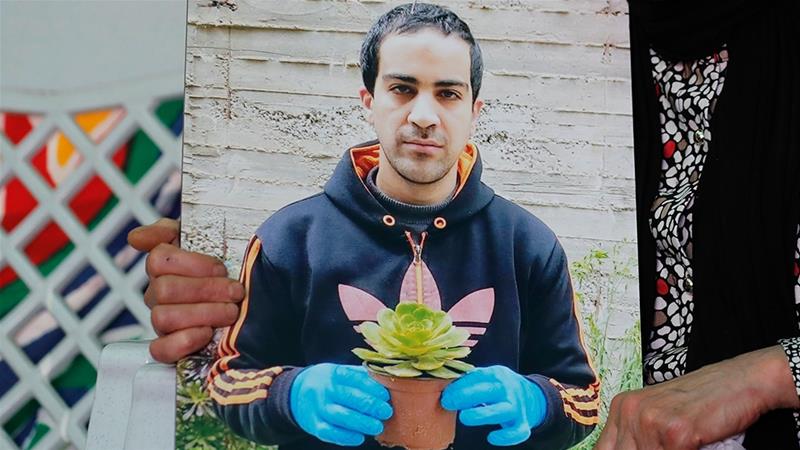
In the dim light of dawn on May 30th, 2020, Iyad al-Hallaq—a beacon of hope to his mother and a special-needs student passionate about cooking—stepped out of his home, his pockets carrying three forms of identification attesting to his autism. His day had begun like any other until it veered off its familiar track in a chilling turn of events.
As the sun peered over Jerusalem’s horizon, Mr. al-Hallaq approached Lions Gate, his heart pounding with a rhythm known all too well to those burdened by the fragility of routine. A sudden break in this rhythm, visible in the CCTV footage, showed him hurrying away from four rushing police officers. The echoes of gunshots followed him, his terrified voice shouting his teacher’s name—Wardeh Abu Hadid.
Abu Hadid found herself thrust into an unimaginable situation, attempting to shield her student while pleading with the officers in both Hebrew and Arabic, “He’s disabled!” In the background, their urgent inquiries—”Where is the gun?”—drummed the harsh rhythm of impending doom. Despite her best efforts, another round of bullets was released, one finding its fatal destination in Mr. al-Hallaq’s abdomen. His life was extinguished amidst baseless allegations of him being an “armed terrorist,” his protective gloves and mask callously perceived as a gun by the occupation forces.
Injustice Continues
Fast-forward three years to July 6, 2023, when the Jerusalem District Court echoed the cold indifference of that tragic morning, acquitting the border police officer who shot Mr. al-Hallaq. Justifying the officer’s actions as self-defense, the court reinforced a grim narrative in which justice turns a blind eye to its vulnerable citizens.
The investigation had been marred by discrepancies. Numerous security cameras, an eyewitness, and the identified officers should have ensured a swift conclusion. Yet the system proved lethargic and inconsistent, aggravating the al-Hallaq family’s anguish. Details such as missing camera footage and the dismissal of Abu Hadid’s account raised questions about the integrity of Israel’s justice system.
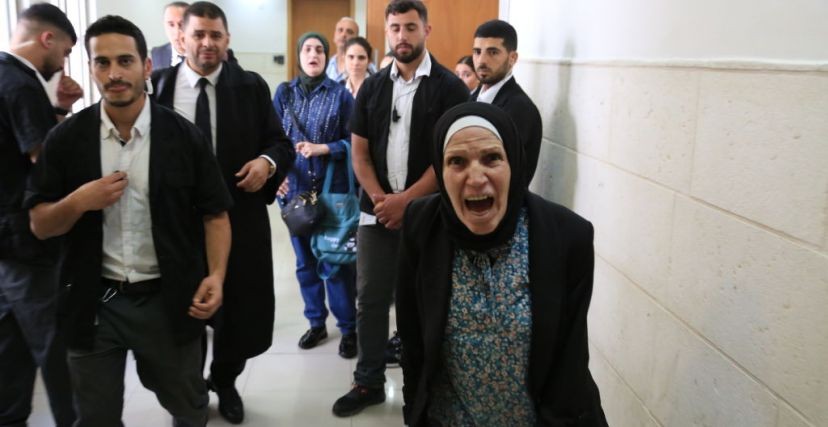
The mother of Iyad al-Hallaq in agony following the acquittal. (Photo: via QNN)
The court’s verdict cast a grim shadow, underlining a daunting fact that only 1.2 percent of complaints against officers in 2021 led to criminal indictments. This grim reality signaled a justice system operating not as a defender of rights but as a device perpetuating systemic marginalization.
In stark contrast, US media has often celebrated Israeli protests against government’s judicial overhaul plans. Thousands of Israelis, hailed as emblems of democracy, march against potential executive tyranny. Yet when the tragic news of Mr. al-Hallaq’s murder—and later his killers’ acquittal—echoed through the streets, silence reigned.
This silence, symptomatic of a deeper indifference, extends beyond Mr. al-Hallaq. Countless Palestinians have met similar fates since the inception of the Zionist state. Their stories, tragically overlooked, expose a cold truth about the Israeli public: Palestinians remain invisible within the justice system and hence, in the public consciousness.
In the words of Mr. al-Hallaq’s grieving father: “For the Jews, there is one legal system, and for the Arabs, there is another.” Palestinians, even in death, are denied due process. The Israeli justice system offers little more than perfunctory condolences, masking the harsh reality of systemic discrimination.
As days pass and indifference persists, the silence of Israeli citizens reveals a profound truth: the government, and by extension its representatives—the officers, prosecutors, and judge in Mr. al-Hallaq’s case—mirrors this sentiment. The devaluation of Palestinian lives has become a brutal norm, overshadowing the inherent human right to protection and justice.
–
This article was written by Mica Maltzman, Miryam Onstot, Galila Ibrahim, and Amina Iman, who are interns at The Jerusalem Fund. The views in this article are those of the author and do not necessarily reflect those of The Jerusalem Fund.
