
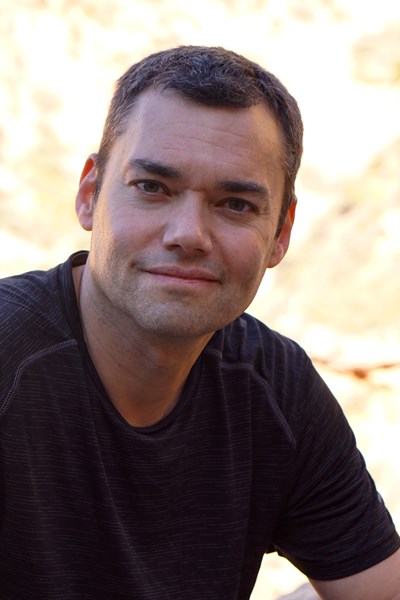
As the two-state solution grows ever more fanciful, Jews and Palestinians need a vision of equality between the Mediterranean and the Jordan River that offers dignity, safety, and freedom for both peoples. Peter Beinart will explore this idea, and the event will be moderated by Said Arikat.
Peter Beinart is Professor of Journalism and Political Science at the City University of New York. He is also a Contributing Opinion Writer at The New York Times, a CNN Political Commentator, Editor-at-Large of Jewish Currents and a Non-Resident Fellow at the Foundation for Middle East Peace. He writes the Beinart Notebook newsletter on Substack.Com
His first book, The Good Fight, was published by HarperCollins in 2006. His second book, The Icarus Syndrome, was published by HarperCollins in 2010. His third, The Crisis of Zionism, was published by Times Books in 2012. Beinart has written for the Wall Street Journal, the Financial Times, the Boston Globe, the Atlantic, Newsweek, Slate, Reader’s Digest, Die Zeit, Frankfurter Allgemeine Zeitung, and Polity: the Journal of the Northeastern Political Science Studies Association. The Week magazine named him columnist of the year for 2004. In 2005, he gave the Theodore H. White lecture at Harvard’s Kennedy School of Government.
He has appeared on “This Week with George Stephanopoulos,” “Charlie Rose,” “Meet the Press,” “The Colbert Report,” and many other television programs.
Beinart graduated from Yale University, winning a Rhodes scholarship for graduate study at Oxford University. After graduating from University College, Oxford, Beinart became The New Republic’s managing editor in 1995. He became senior editor in 1997, and from 1999 to 2006 served as the magazine’s Editor.
Said Arikat is a Member of the Palestine Center Committee, and the Washington bureau chief for the Palestinian newspaper al-Quds, a daily for which he is a writer, columnist, and analyst. He previously served as spokesman and director of public information for the United Nations Assistance Mission for Iraq, and currently teaches as an adjunct professor at American University in Washington, DC.
